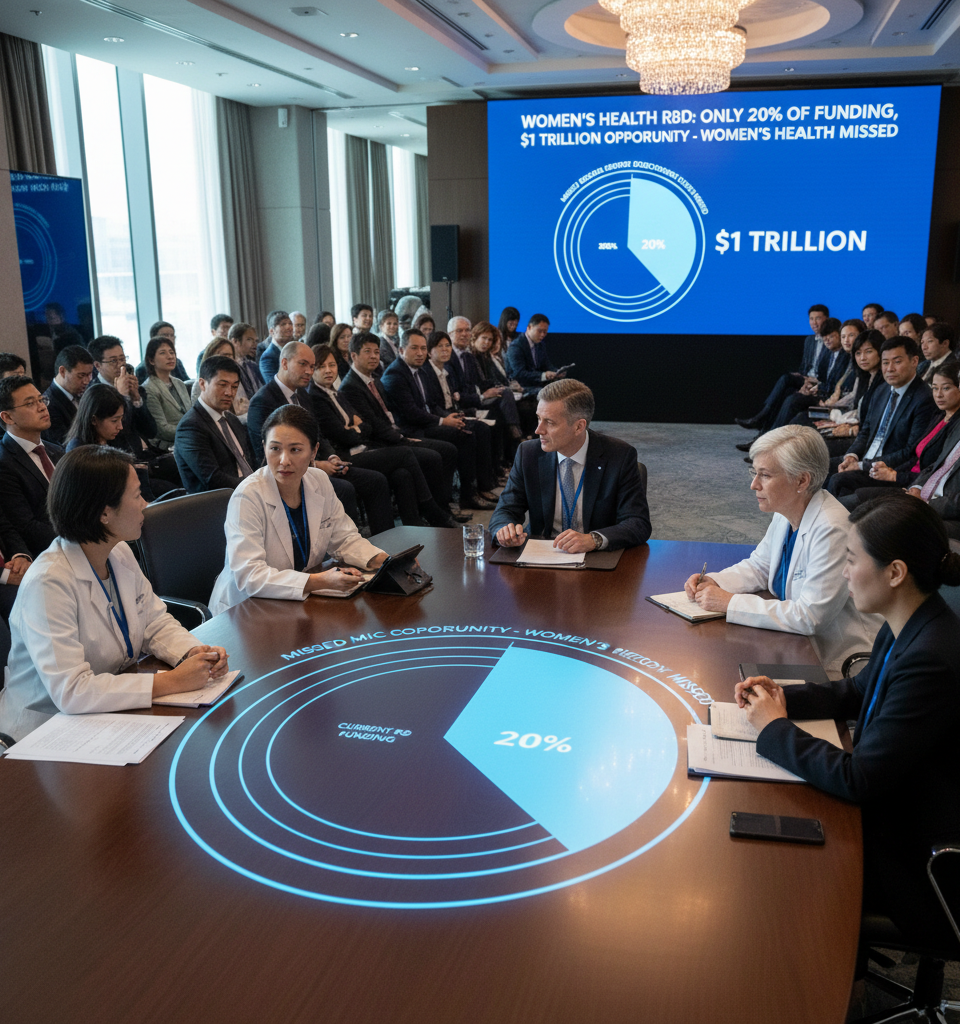
The World Economic Forum has highlighted a severe underfunding in women's health research and development, with recent analyses indicating that only 20% of global R&D funding is allocated to this critical area. This revelation comes alongside the unveiling of a new 'radar,' developed in collaboration with the Gates Foundation and Wellcome Leap, which further underscores the problem by showing that fewer than 3% of clinical trials are specifically designed for women.
The Unaddressed Economic Potential
This significant funding disparity is not merely a public health concern but also represents a substantial missed economic opportunity, estimated to be as high as $1 trillion. The underinvestment impacts various facets of healthcare, from drug discovery and device development to personalized medicine. The persistent neglect of women-specific health conditions and biological differences leads to suboptimal health outcomes for half the global population, hindering productivity and economic participation.
Data Driving the Discussion
The 'radar' tool, a collaborative effort between the World Economic Forum, the Gates Foundation, and Wellcome Leap, provides concrete data illuminating the extent of the problem. Its findings are particularly concerning, pointing to a systemic bias within the research paradigm. The statistic that fewer than 3% of clinical trials are women-specific is a stark reminder of how deeply ingrained this oversight is in the medical research process.
Impact on Medical Innovation
The repercussions of this underfunding are far-reaching. When clinical trials are not designed to account for biological differences between sexes, the efficacy and safety of new treatments can be misjudged, leading to less effective or even harmful interventions for women. This lack of tailored research also means that conditions predominantly affecting women, or those presenting differently in women, receive less attention, potentially delaying breakthroughs and effective management strategies.
Calls for Strategic Investment
The World Economic Forum's initiative serves as a powerful call to action for governments, pharmaceutical companies, venture capitalists, and philanthropic organizations. Addressing this imbalance requires a concerted effort to redirect R&D investment towards women's health. Proponents argue that a more equitable distribution of funding would not only accelerate medical advancements but also unlock significant economic growth through improved public health and workforce participation.
Understanding the Opportunity
The estimated $1 trillion opportunity reflects the potential economic gains from healthier women, including increased productivity, reduced healthcare costs, and the creation of new markets for specialized treatments and technologies. Investing in women's health R&D is increasingly being recognized as a smart economic strategy, yielding returns that extend far beyond direct healthcare benefits. It promises to foster a more resilient and equitable global economy.
The Path Forward
Moving forward, the focus will be on leveraging the data provided by the new 'radar' to advocate for systemic changes in research funding and trial design. The World Economic Forum, alongside its partners, aims to galvanize stakeholders to prioritize women's health, promoting more inclusive research practices and ultimately closing the critical funding gap. This renewed emphasis is expected to spur innovation and foster a future where healthcare solutions are truly equitable and effective for everyone.