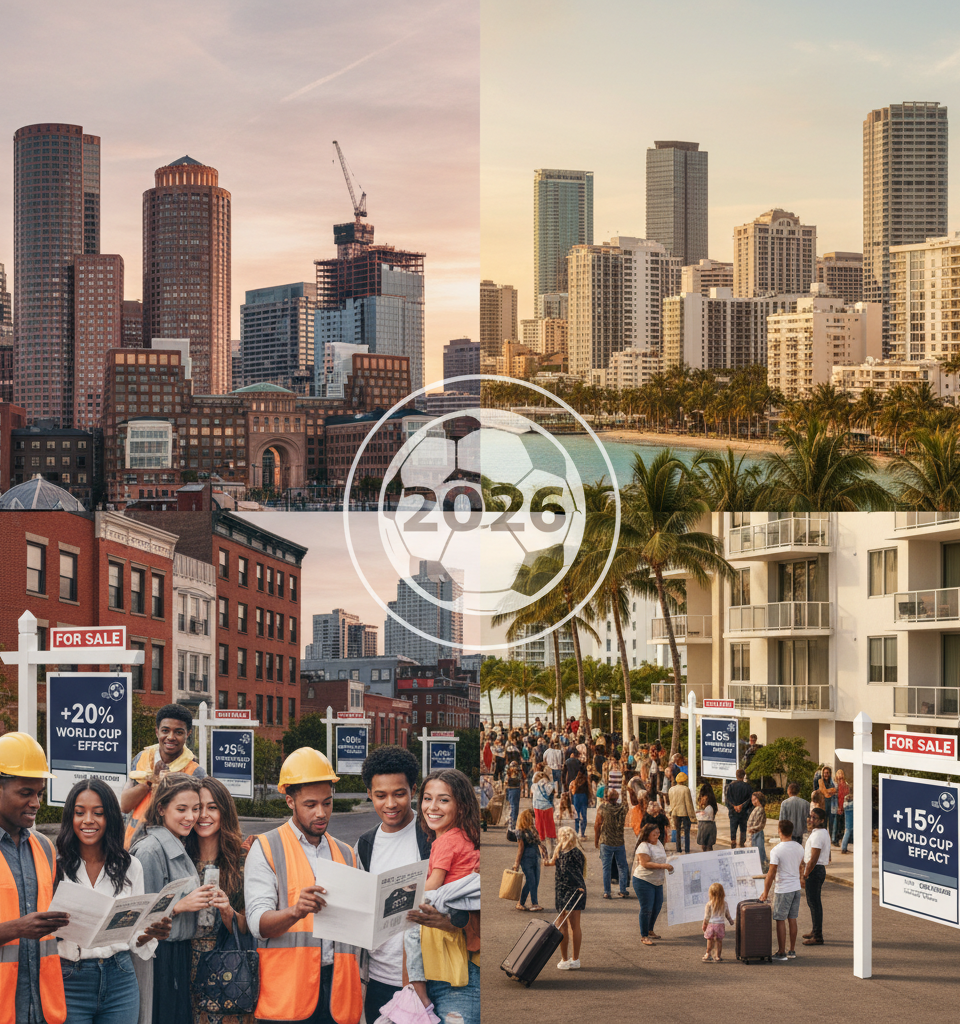
As the 2026 FIFA World Cup draws closer, the co-hosting cities in the United States are already witnessing preliminary shifts in their housing sectors. Boston, Massachusetts, is reportedly experiencing a trend where property listings are being pulled from the market, signaling potential strategies by landlords and owners ahead of the influx of visitors. Conversely, Miami, Florida, is bracing for a significant increase in demand, particularly from international buyers and travelers, as the global spectacle approaches.
The economic implications of hosting a major international event like the World Cup are extensive, often reaching far beyond the immediate tourism and hospitality sectors. The housing market, in particular, tends to react preemptively to such large-scale events, as property owners anticipate lucrative opportunities. In Boston, the decision to pull listings could indicate an intention to transition properties to short-term rentals or hold out for higher rental rates during the tournament period, mirroring patterns observed in other global cities that have hosted similar mega-events.
Miami's situation highlights its established appeal to international clientele, which is only expected to intensify with the World Cup. The city's robust global tourism infrastructure and its status as a gateway for Latin American and European visitors position it to capitalize on the tournament. The anticipated influx of international buyers suggests a dual impact: a surge in short-term rental demand for event attendees and a potential boost in long-term sales or investment from visitors who become more familiar with the market or seek a permanent presence.
Historically, cities hosting major events like the Olympics or the World Cup often see short-term appreciation in rental values and, occasionally, in property sale prices within proximity to venues or popular tourist areas. However, these effects can be localized and temporary. The long-term impact on housing affordability for local residents remains a key concern for urban planners and economists as these markets adapt to global spotlight events.
Experts are closely monitoring these early indicators to understand the full scope of the World Cup's influence. While the immediate focus is on the tournament's economic benefits, there's an underlying discussion about how these shifts might permanently alter the housing landscape in these cities. The increase in short-term rental conversions, for example, could further tighten already competitive long-term rental markets.
The strategies adopted by property owners in Boston, coupled with the anticipated international demand in Miami, underscore the diverse ways host cities are preparing to leverage the 2026 World Cup. These preparations are not merely logistical but are actively reshaping fundamental economic sectors, with the housing market being one of the most prominent.
Looking ahead, the coming months are expected to reveal more concrete trends as both cities finalize their infrastructure and marketing efforts for the tournament. The evolving dynamics in Boston and Miami will offer valuable insights into how global sporting events can act as catalysts for significant, albeit varied, changes in urban real estate environments. These early movements serve as a critical preview of the widespread economic ripple effects that the World Cup promises to bring to its host communities.