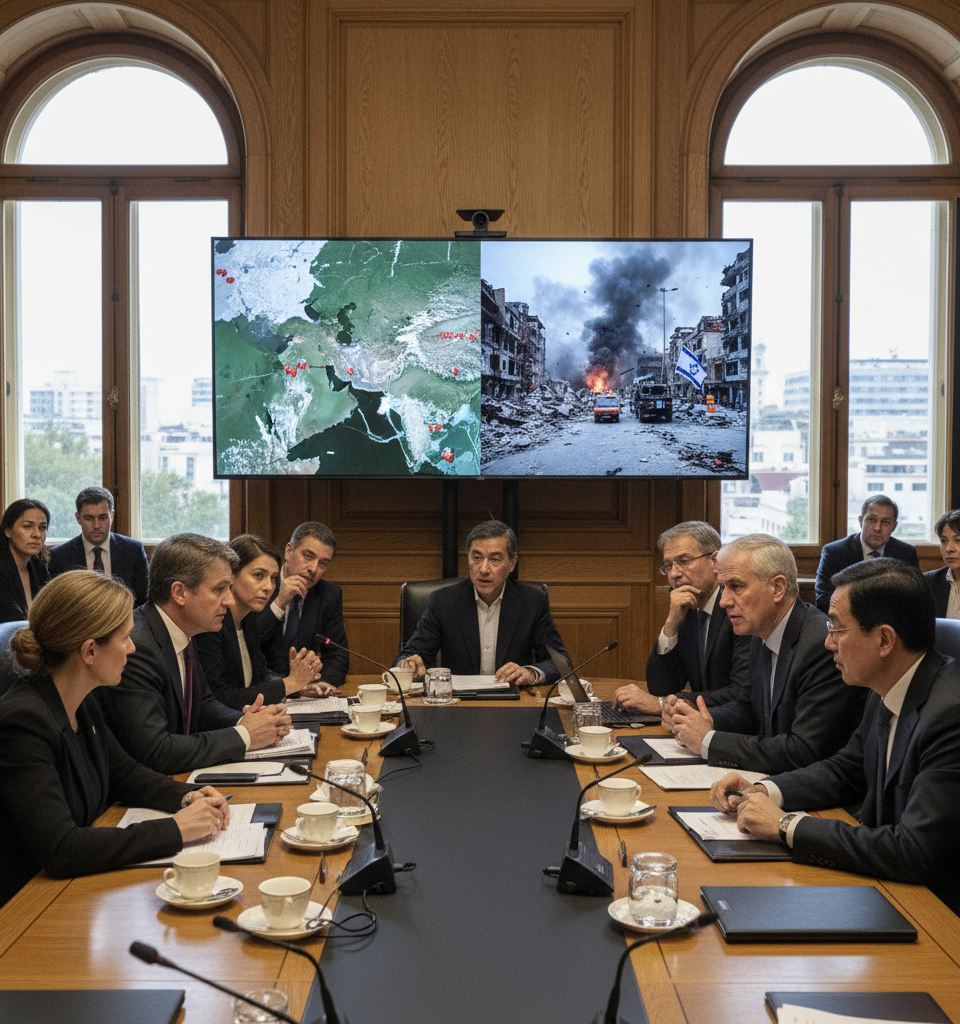
The fragile ceasefire brokered by President Trump between the United States and Iran is reportedly under severe strain, with diplomatic efforts intensifying to avert a wider regional escalation. Vice President JD Vance is currently en route to Pakistan, where he is slated to engage in crucial discussions with Iranian officials. The urgency of Vance's mission underscores growing international concern following recent Israeli military operations in Lebanon, which observers fear could unravel the precarious truce and plunge the Middle East into renewed instability.
Escalating Tensions Threaten Regional Stability
The ceasefire, a cornerstone of regional security dialogue since its inception, now appears vulnerable to the cascading effects of ongoing hostilities. Israel's actions in Lebanon have injected a new layer of complexity into an already delicate geopolitical landscape. Analysts suggest these military engagements represent a significant test of the ceasefire's resilience, raising questions about the capabilities of all parties to de-escalate and adhere to the terms of the agreement. The international community is closely monitoring the situation, with numerous world leaders reportedly pushing for the preservation of the Iran talks, recognizing the immense risks associated with their collapse.
The Diplomatic Tightrope: Vance's Pivotal Role
Vice President Vance's visit to Pakistan is widely seen as a last-ditch effort to salvage the diplomatic channel with Tehran. His agenda is expected to focus on reaffirming the ceasefire's principles, addressing Iranian concerns regarding Israeli actions, and seeking commitments for de-escalation from both sides. The choice of Pakistan as a neutral ground for these high-level discussions highlights the sensitivity of the situation and the perceived need for a discreet, yet robust, diplomatic engagement. Success for Vance would mean not only preventing the ceasefire's disintegration but also laying the groundwork for a more stable future in a region perpetually on the brink.
Global Implications of a Ceasefire Collapse
Should the ceasefire fail, the repercussions would be felt far beyond the Middle East. Energy markets, already volatile, could experience significant upheaval, leading to higher oil prices and global economic instability. Geopolitical alliances could be tested, with nations forced to take sides in a potentially expanded conflict. Furthermore, the credibility of international diplomatic efforts, particularly those championed by the United States, would suffer a substantial blow. The ongoing nature of the Israeli operations in Lebanon adds a critical, immediate dimension to these risks, amplifying the pressure on Vance's diplomatic endeavors.
Industry and Market Response to Uncertainty
Market reactions to the escalating tensions have been palpable. Global stock markets have shown signs of nervousness, particularly those with significant exposure to Middle Eastern energy supplies or supply chains running through the region. Defense contractors, conversely, have seen renewed interest from investors anticipating potential increases in military spending. Shipping insurance premiums for vessels transiting vital waterways in the region have reportedly ticked upwards, reflecting the heightened risk assessment by the industry. Commodity traders are closely watching oil prices, which remain sensitive to any news of escalation or de-escalation from the current diplomatic efforts.
The Road Ahead: A Critical Juncture
The coming days are expected to be crucial for the fate of the Iran ceasefire. Vice President Vance's meetings in Pakistan will undoubtedly set the tone for future engagements, or disengagements, between the parties. The international community's unified call to preserve the talks underscores the gravity of the situation and the widespread desire to prevent a wider conflict. All eyes remain on Islamabad, where Vance's dialogue with Iranian officials will determine whether the fragile peace can be maintained, or if the region will descend into further turmoil. The stakes for regional stability and global security cannot be overstated.