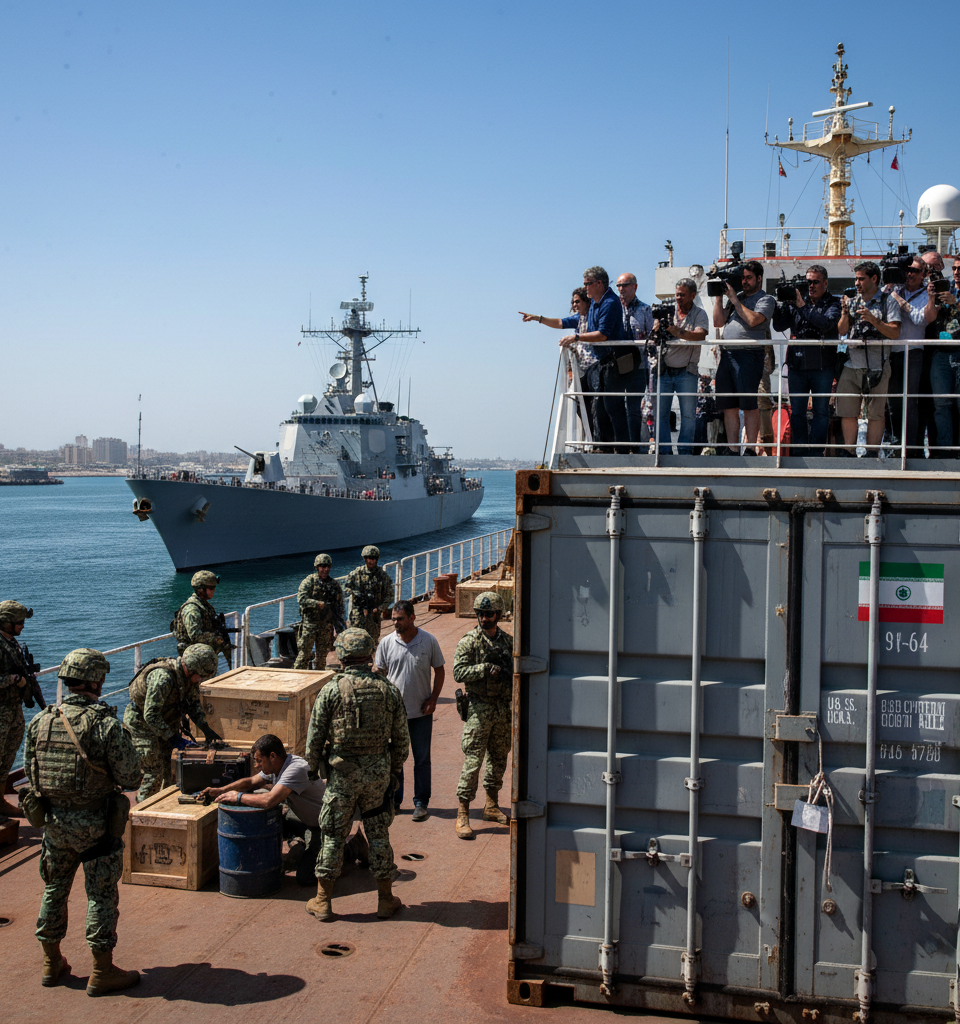
The United States Navy's recent seizure of an Iranian cargo ship, reportedly laden with illicit weapons bound for Houthi rebels in Yemen, has sent shockwaves across the Middle East, immediately casting a long shadow over a fragile, nascent ceasefire. This decisive action, confirmed by the US Department of Defense, occurred in the Arabian Sea early Thursday morning and has been framed by Washington as a crucial enforcement of international maritime law and UN Security Council resolutions. However, Tehran has vehemently condemned the seizure as an act of piracy and a direct provocation, raising fears that hard-won de-escalation efforts could unravel, plunging the region back into a cycle of conflict and reprisal.
Geopolitical Stakes and Regional Instability
The timing of this interdiction is particularly critical, unfolding precisely as diplomatic efforts, largely spearheaded by regional powers and international mediators, were beginning to yield tentative results towards a more enduring peace in Yemen. The Houthis, backed by Iran, and the Saudi-led coalition had shown initial willingness to engage in de-escalation talks, and a de facto ceasefire had largely held for weeks. The US seizure not only injects a new layer of complexity into these delicate negotiations but threatens to derail mutual trust, which is already in short supply. Analysts are now closely watching the reactions from Riyadh and Abu Dhabi, key allies of the US and central players in the Yemeni conflict, who view Iranian arms shipments as a direct threat to their security.
Specific details released by CENTCOM indicate that the seized vessel was carrying advanced missile components, anti-tank guided missiles, and other military hardware, all prohibited under existing arms embargos. According to unnamed US intelligence officials, the manifest and origin points strongly suggest an Iranian state-sponsored operation. The cargo is currently undergoing detailed inspection at an undisclosed naval facility. The Iranian Foreign Ministry, in a strongly worded statement, has demanded the immediate release of the ship and its crew, denying any illicit cargo and accusing the US of violating international shipping lanes. This incident marks one of the most significant direct US military interdictions of Iranian assets in recent years, escalating the maritime tensions in a region vital for global energy supplies.
Economic and Trade Repercussions
The immediate economic implications are significant. The Strait of Hormuz, a narrow chokepoint through which approximately one-fifth of the world's oil transits, remains hyper-sensitive to any hint of conflict escalation. Oil markets have already reacted with a noticeable uptick in crude prices following the news, reflecting anxieties over potential supply disruptions. Shipping insurers are reviewing war risk premiums for vessels operating in the Persian Gulf and Arabian Sea, anticipating increased apprehension among cargo carriers. Any further escalation could lead to higher shipping costs, longer transit times due to rerouting, and a general destabilization of global supply chains that rely heavily on the region's sea lanes. Major international shipping companies are already advising heightened vigilance for vessels in the area.
Expert observers are echoing these concerns. Dr. Eleanor Vance, a senior fellow at the Council on Foreign Relations, commented, "This isn't merely a tactical interception; it's a strategic maneuver with far-reaching geopolitical implications. It underscores the Biden administration's commitment to countering Iranian proliferation in the region, but at a potentially very high cost to the nascent peace process. The risk of a miscalculation leading to broader conflict is now considerably elevated." Similarly, industry executives in the oil and gas sector are closely monitoring the situation, with several expressing apprehension about sustained volatility.
The Path Forward: Diplomacy on the Brink
Looking ahead, the immediate focus will be on the diplomatic fallout. The United Nations Security Council is expected to convene an emergency session to address the incident, with both the US and Iran likely to present their arguments. The effectiveness of any renewed mediation efforts will largely depend on both Washington and Tehran's willingness to de-escalate. There's a tangible risk of a tit-for-tat response from Iran, which has a history of targeting commercial shipping or regional US assets in retaliation for perceived aggressions. The international community, particularly European powers, will be pressing all parties for restraint and a return to the negotiating table. The window for a peaceful resolution in Yemen, which seemed to be opening, now appears to be closing rapidly, overshadowed by renewed confrontation. The incident also serves as a stark reminder of the persistent shadow war between Iran and its adversaries in the maritime domain.