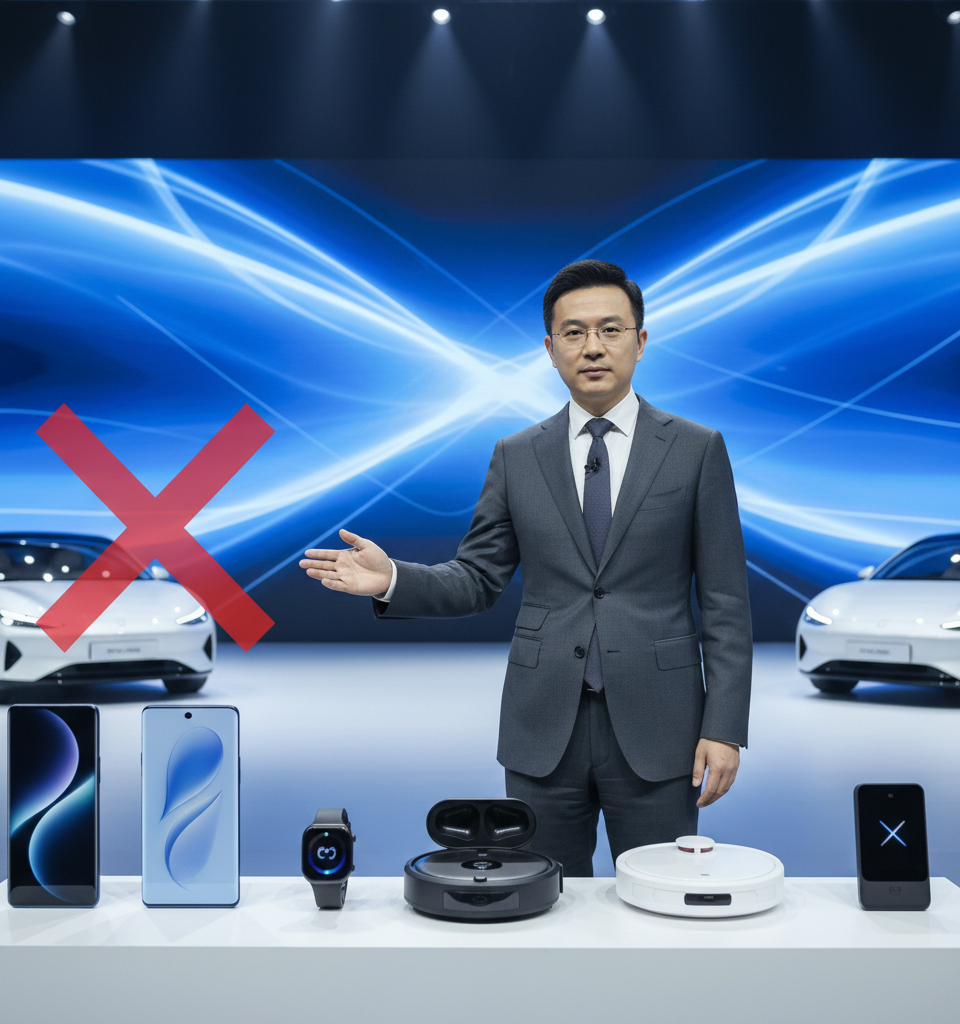
Xiaomi, a company synonymous with budget-friendly consumer electronics, will not extend its 'dirt-cheap' pricing strategy to its nascent electric vehicle (EV) division, according to recent statements from CEO Lei Jun. Jun explicitly declared that the company has no intentions of launching EVs priced below 100,000 yuan (approximately $13,800 USD), emphasizing that the integration of sophisticated intelligent vehicle technologies precludes such a low-cost offering.
This pronouncement provides crucial clarity on Xiaomi's positioning within the increasingly competitive automotive sector. While Xiaomi has successfully built a global brand on affordable smartphones, smart home devices, and other gadgets, its ambitions in the EV space appear to be targeting a more premium segment, at least initially. The decision underscores the significant technological hurdles and associated costs involved in producing modern EVs, particularly those equipped with advanced driver-assistance systems, connectivity features, and high-performance battery technology.
Strategic Rationale Behind Pricing Floor
Lei Jun's rationale centers on the inherent expenses tied to intelligent vehicle technology. Modern EV development is not merely about electric powertrains; it heavily involves sophisticated software, high-performance computing platforms, an array of sensors (LiDAR, radar, cameras), and robust connectivity infrastructure. These components are essential for features like advanced driver-assistance systems (ADAS), over-the-air (OTA) updates, and smart cabin experiences – elements that consumers increasingly expect from new-generation vehicles.
Attempting to integrate such advanced systems into a vehicle priced under 100,000 yuan would necessitate severe compromises on quality, performance, or profitability, an outcome Xiaomi evidently wishes to avoid. The company's entry into the EV market is a high-stakes venture, and maintaining a certain standard of technological sophistication appears to be a core pillar of its strategy, even if it means foregoing the ultra-low-end segment that defines much of its other product lines.
Broader Market Implications and Competition
Xiaomi's decision to steer clear of the sub-100,000 yuan EV market segment reflects a broader trend among tech companies entering the automotive space. Unlike traditional automakers, who might leverage decades of manufacturing efficiency to produce budget models, tech firms often prioritize advanced features and user experience, which inherently drive up costs. This strategy positions Xiaomi's EV offerings to compete more directly with mid-range and potentially upper-mid-range electric vehicles from established players and other tech entrants.
The Chinese EV market, in particular, is highly fragmented and intensely competitive, with numerous domestic brands vying for market share across various price points. While there are some successful ultra-cheap EVs, such as those from Wuling, these vehicles often forgo many advanced intelligent features. By focusing on a higher price bracket, Xiaomi is likely aiming to differentiate itself through technological prowess and a seamless user experience, leveraging its existing ecosystem of connected devices.
Future Outlook and Investment Direction
This strategic clarification by CEO Lei Jun indicates Xiaomi's sustained commitment to substantial investments in research and development for its EV division. The emphasis on intelligent vehicle technology suggests a focus on software-defined vehicles, autonomous driving capabilities, and advanced human-machine interfaces. These areas require significant capital expenditure and a high concentration of engineering talent.
Industry observers will now be watching closely for further details on Xiaomi's EV product roadmap, including specific models, target pricing within the stated floor, and launch timelines. The company's foray into EVs is arguably its most ambitious undertaking since its inception, and the strategic guardrails articulated by Jun suggest a methodical approach aimed at carving out a niche defined by technological excellence rather than pure affordability in the automotive sphere. The company's journey into premium, intelligent EVs represents a significant departure from its established brand identity in other consumer electronics sectors, signaling a maturity in its diversification strategy.