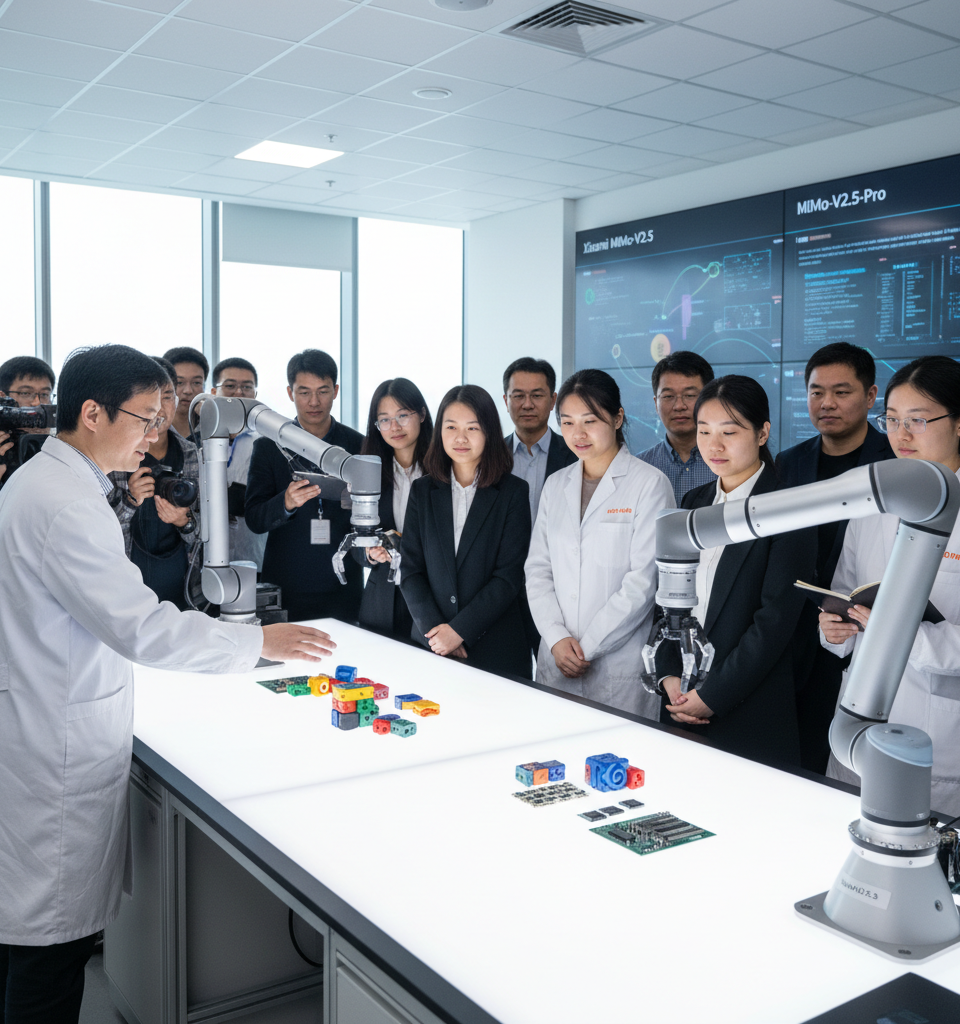
5-Pro large language models. Announced recently, these open-source models are immediately available under the highly permissive MIT License, signaling Xiaomi's commitment to fostering innovation and widespread adoption within the AI community. This strategic move aims to equip enterprises and independent developers with powerful, cost-effective tools optimized for complex 'claw' tasks, a specialized domain within robotics and AI that involves intricate interaction and manipulation.
Context and Background
This release builds upon a growing trend from Xiaomi, which has consistently been delivering high-performance, yet remarkably affordable, open-source AI solutions. The company's foray into advanced AI models underscores its ambition to diversify beyond hardware and establish itself as a significant player in the artificial intelligence landscape. Historically, developing and deploying sophisticated AI models for specialized robotic applications often required substantial investment in proprietary software and extensive research. Xiaomi's open-source strategy democratizes access to such technology, potentially lowering the barrier to entry for businesses looking to integrate advanced AI into their operations, particularly in manufacturing, logistics, and automation sectors where 'claw' tasks are prevalent.
Key Details The MiMo-V2.5 and
MiMo-V2.5-Pro models are specifically engineered for agentic 'claw' tasks, a segment of robotics focused on precise object identification, grasping, and manipulation. While specific performance benchmarks were not detailed in the initial announcement, Xiaomi emphasizes their efficiency and affordability as key differentiators. The choice of the MIT License is crucial, as it allows for unrestricted use, modification, and distribution, including for commercial applications, without stringent attribution requirements or royalty fees. This license choice positions these models as highly attractive for businesses seeking to integrate AI without incurring significant licensing costs or being bound by restrictive terms. Downloads for both models are now available, offering developers direct access to the software.
Industry and Market Impact
The introduction of MiMo-V2.5 and V2.5-Pro is poised to send ripples across several industries. For robotics and automation, these models could accelerate the development of more intelligent and adaptable robotic systems, especially in areas like warehouse automation, surgical robotics, and even domestic assistance, where precise manipulation is critical. The open-source nature will likely foster a vibrant ecosystem of developers who can build upon Xiaomi's foundation, potentially creating novel applications and improvements at a rapid pace. Furthermore, the emphasis on affordability could disrupt the market for specialized AI solutions, forcing incumbent providers to re-evaluate their pricing strategies and feature sets.
Expert Perspective Industry analysts view
Xiaomi's latest AI release as a shrewd strategic maneuver. "Xiaomi is not just selling phones anymore; they are selling a technology ecosystem," noted Dr. Evelyn Reed, a lead AI researcher at TechForge Analytics. "By open-sourcing these advanced models, especially for a niche yet high-impact area like robotic manipulation, they are positioning themselves as a foundational technology provider. This could significantly impact their brand perception beyond consumer electronics." Another expert, Professor Kenji Tanaka from Kyoto University's Robotics Lab, commented, "The MIT License is a game-changer for businesses. It removes a significant hurdle for commercial deployment, making these models incredibly appealing for startups and large enterprises alike who previously shied away from proprietary AI solutions due to cost or vendor lock-in."
What's Next The immediate future will likely see a surge in experimentation and integration of MiMo-V2.5 and V2.5-Pro by developers worldwide.
Xiaomi's strategy is expected to foster a stronger developer community around its AI offerings, potentially leading to collaborative enhancements and the emergence of specialized derivatives. Future updates could include expanded capabilities beyond 'claw' tasks, integration with Xiaomi's existing hardware ecosystems, and potentially new open-source initiatives targeting different AI domains. This move also sets a precedent for other technology giants to consider more permissive licensing for their advanced AI research, paving the way for a more open and collaborative AI development landscape. The long-term implications could see Xiaomi strengthening its position in the competitive AI market, influencing future industry standards, and solidifying its reputation as an innovation leader across multiple technological fronts.