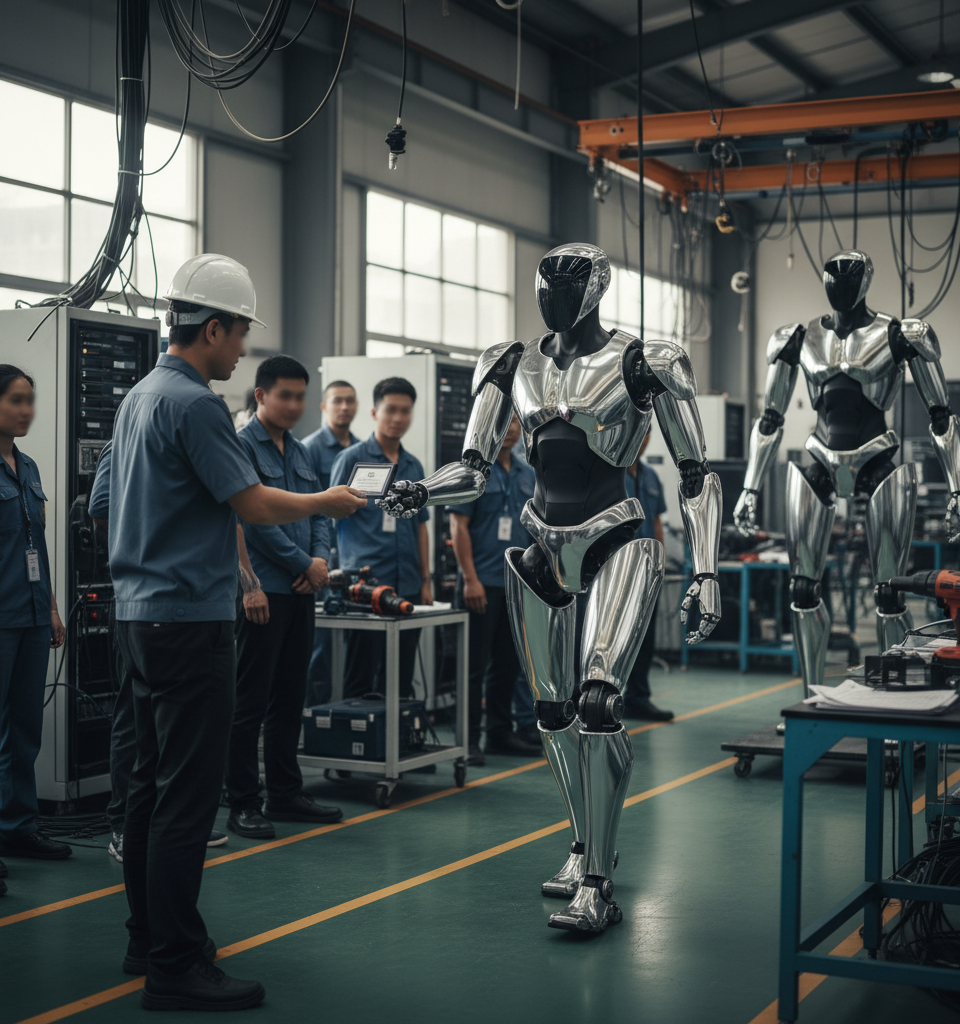
The efficiency of manufacturing processes, particularly in high-tech assembly, directly impacts supply chain costs and speed-to-market for global goods. Rapid deployment of advanced robotics, like this, could significantly reduce the lead times and labor expenses inherent in international production and distribution networks.
Chinese electric vehicle (EV) and technology firm XPENG has reportedly achieved a notable milestone in robotics development. Its 'Iron' humanoid robot, a sophisticated bipedal machine, was observed to be fully functional and ready for operational tasks immediately following its assembly. The robot's debut performance included it walking autonomously to collect its staff identification badge, suggesting an advanced state of readiness and integration into a work environment.
Context and Background
This development comes amidst a global race among technology giants and automotive manufacturers to integrate artificial intelligence and advanced robotics into both production lines and broader societal applications. Humanoid robots, in particular, represent a significant frontier, promising to automate tasks requiring human-like dexterity and mobility. XPENG, primarily known for its electric vehicles, has been expanding its portfolio into robotics, signaling a broader strategic vision that intertwines smart manufacturing with future mobility solutions. The company's push into such advanced robotics highlights a commitment to innovation beyond its core automotive business.
Key Details
According to reports, the 'Iron' humanoid robot exhibited self-sufficiency directly after the completion of its physical construction. This immediate operational capability, without apparent extensive calibration or boot-up delays, is a critical step forward. The act of walking to receive a staff badge, while seemingly a small gesture, symbolizes the robot's capacity for independent movement and interaction within a human-centric work setting. Such an event would signify that the robot's hardware and software integration were seamless, allowing for instant task execution upon power-up.
Industry and Market Impact
Should the 'Iron' robot's immediate post-assembly functionality become a standard feature in humanoid robotics, it could profoundly impact various industries. Manufacturing, logistics, and even service sectors could see accelerated deployment of robotic workforces, potentially streamlining operations and reducing the time and cost associated with integrating new automated systems. For global businesses, this means faster scaling of automated production facilities and reduced dependence on human labor for repetitive or hazardous tasks, thereby influencing global labor markets and supply chain resilience. The ease of deployment demonstrated by XPENG's robot could lower the barrier to entry for companies considering automation.
What's Next
The immediate implications of such a successful demonstration would be a heightened focus on the commercial viability and scalability of the 'Iron' robot. Future developments are likely to involve further testing of the robot's capabilities in various operational environments, including more complex tasks and interactions. Attention will turn to how XPENG plans to deploy these robots, whether within its own manufacturing facilities to enhance EV production or as a separate product offering to other industries. The advancement could also spur competitors to accelerate their own humanoid robot development, intensifying the innovation race in the robotics sector. The global market will closely watch for announcements regarding the robot's specifications, cost, and projected deployment timeline.