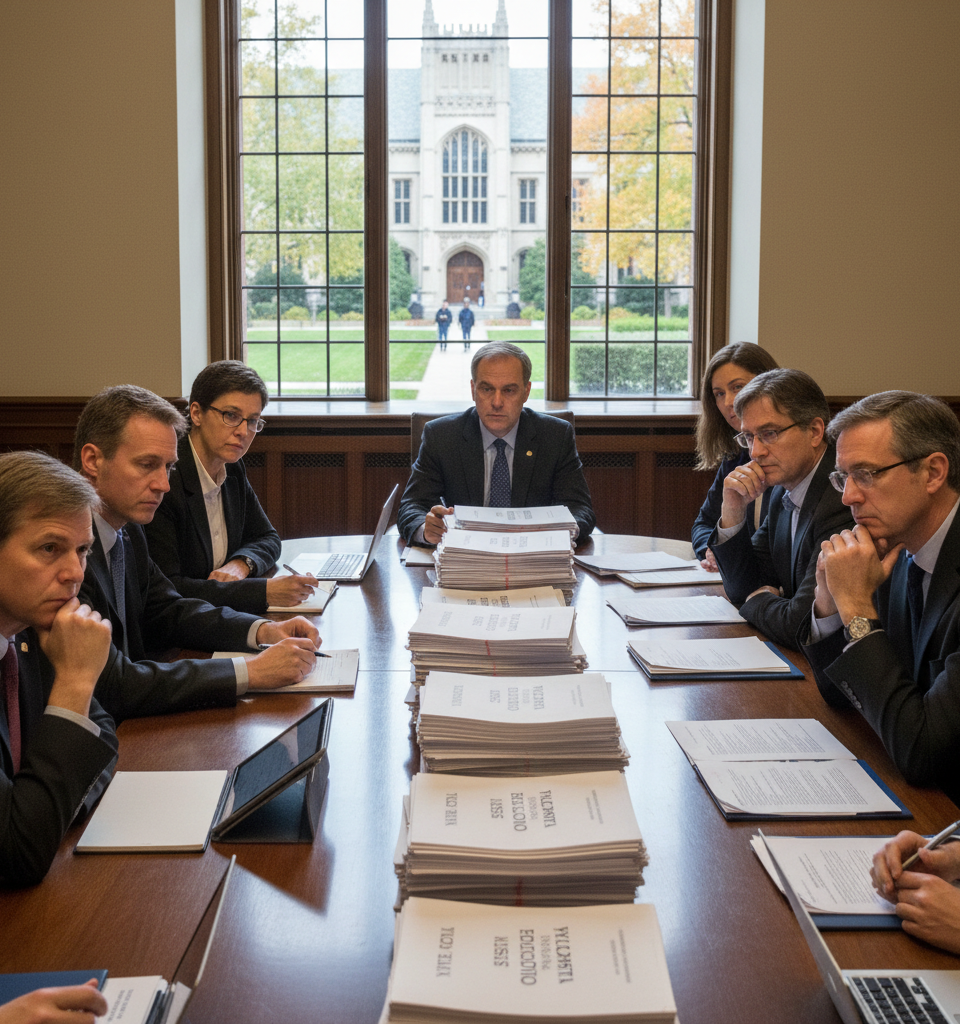
NEW HAVEN, CT – October 26, 2023 – A distinguished 10-member committee at Yale University has released a groundbreaking report, delivering a stark and unprecedented indictment of academia's intrinsic role in precipitating the very forces currently destabilizing American colleges and universities. The long-anticipated findings, born from extensive internal deliberation, challenge the prevailing assumption that external pressures alone are to blame, instead pointing an accusatory finger inward at institutional practices, academic structures, and entrenched cultural norms.
This pivotal report arrives at a moment of profound uncertainty for higher education. Universities are grappling with declining enrollment figures, escalating tuition costs, mounting student debt, fierce political scrutiny, and a perceived erosion of public trust. Historically, much of the discourse has framed these issues as external threats. However, this Yale committee, composed of senior faculty and administrators, boldly reframes the narrative, arguing that many of these crises are self-inflicted or significantly exacerbated by academic institutions' own policies and priorities over recent decades. This introspection demands a paradigm shift in how higher education perceives and addresses its foundational problems.
Key details from the report paint a comprehensive picture of self-sabotage. While specific figures were not immediately made public, sources close to the committee indicated the report critiques several core areas. It highlights the unchecked proliferation of administrative bloat, with non-faculty staff growing disproportionately to faculty and student numbers, often leading to increased overheads translated into higher tuition. The committee also reportedly scrutinized the increasing specialization and atomization of academic disciplines, which can hinder interdisciplinary collaboration and broader intellectual engagement. Furthermore, it points to a perceived disconnect between academic research and its societal impact, along with a struggle to adapt curricula to evolving workforce needs. One anonymous committee member was quoted as stating, “We found clear evidence that, in many respects, we have been our own worst enemy, creating incentives and structures that unintentionally undermined our core mission.”
The ripple effects of such a critical self-assessment from a prestigious institution like Yale are expected to be profound across the entire higher education landscape. This report could embolden governing boards and state legislatures to demand greater accountability and reform from universities. It may also provide ammunition for critics advocating for more radical changes to funding models, tenure systems, and curriculum design. For institutions already struggling with financial viability and public perception, the Yale report serves as a powerful call to action, or perhaps, a harbinger of further pressure from external stakeholders. The stakes are particularly high for regional public universities and smaller liberal arts colleges, which often lack the financial endowments to absorb protracted periods of declining enrollment or intense reform.
Experts and education analysts have largely welcomed the report's candidness, viewing it as a long-overdue moment of reckoning. Dr. Eleanor Vance, a senior fellow at the American Council on Education, commented, "For an institution like Yale to issue such a self-critical assessment is remarkable and, frankly, vital. It shifts the burden of responsibility somewhat, forcing us to look inward before we can effectively address external challenges. This isn't just about 'wokeness' or political correctness; it's about fundamental structural and financial issues." Others suggest that the report's impact will depend on whether its recommendations translate into concrete actions, not just at Yale, but across the sector.
Looking ahead, the Yale report is anticipated to spark vigorous debate and, potentially, significant reform efforts. Universities may face increasing pressure to streamline administrative functions, reassess the value proposition of certain academic programs, and more transparently link educational outcomes to student success. The report could also catalyze a broader movement towards greater inter-institutional collaboration and shared resources to combat rising costs. Furthermore, it might prompt a re-evaluation of the tenure system and faculty roles in an increasingly digital and globalized educational environment. The coming years will reveal whether this "brutal assessment" serves as a catalyst for genuine systemic improvement or merely another academic critique in a field resistant to change.