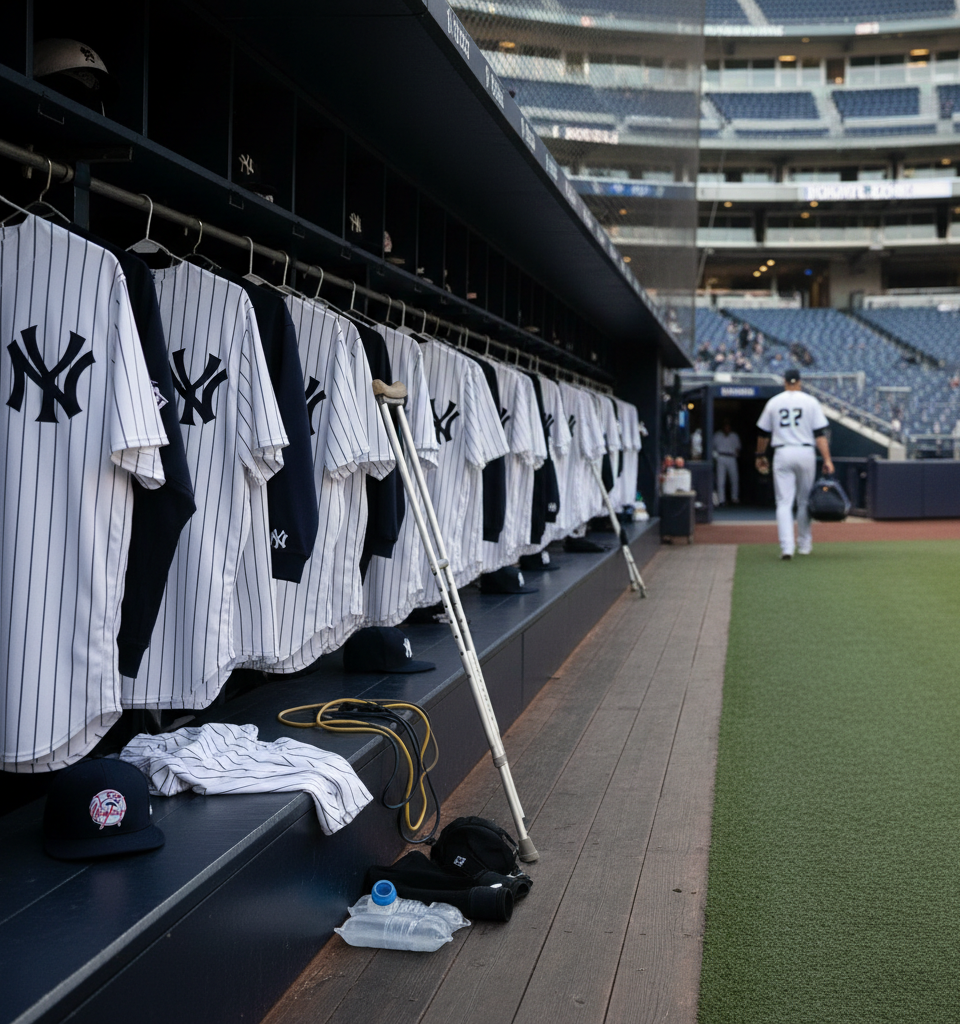
The New York Yankees' operational planning is immediately impacted by the loss of a key player, underscoring the critical importance of robust roster depth for sustained performance. This situation highlights how unexpected personnel changes can trigger swift strategic realignments within competitive organizations.
New York, NY – The New York Yankees announced today that center fielder Trent Grisham has been placed on the 10-day injured list. The move, effective Saturday, September 4th, 2026, is a direct result of a right hamstring strain sustained by the player. This unexpected development necessitates immediate roster adjustments for the club as it navigates the demanding late-season schedule.
Player Profile and Role
Trent Grisham, known for his defensive prowess in center field and occasional offensive contributions, has been a significant component of the Yankees' lineup. His absence creates a void in a crucial defensive position, impacting both the team's outfield alignment and its bench depth. Hamstring strains, while common in professional sports, often require careful rehabilitation to prevent re-injury, typically sidelining players for a minimum of 10 to 14 days, and sometimes longer depending on the severity.
Immediate Roster Implications
To compensate for Grisham's absence, the Yankees are compelled to make immediate roster adjustments. Such changes often involve calling up a player from their minor league affiliates or reassigning existing bench players to a more prominent role. The specific player tapped to fill the active roster spot was not detailed in the initial announcement, but it will likely be an outfielder or a utility player capable of covering center field. These decisions are critical, as they can influence team dynamics and overall performance during a pivotal phase of the season.
Broader Business and Strategic Context
For a major league franchise like the New York Yankees, player injuries carry significant business implications. Beyond on-field performance, player health affects merchandise sales, fan engagement, and broadcasting narratives. The financial investment in player salaries, combined with the strategic imperative to win, means that every injury requires a sophisticated response, including medical evaluations, rehabilitation planning, and talent pipeline management from the minor league system. The ability to absorb and mitigate the impact of such setbacks is a hallmark of well-managed sports organizations.
Looking Ahead: Recovery and Return
Grisham's return to play will depend on the severity of the hamstring strain and his progress through rehabilitation. The 10-day injured list designation means he could be eligible to return as early as September 14th, 2026, assuming a swift recovery. However, teams often exercise caution with hamstring injuries to avoid premature returns that could lead to more serious, season-ending issues. The Yankees' medical staff will closely monitor his condition, and updates are expected as his recovery progresses. The club's performance during this period will be closely scrutinized to assess the effectiveness of their roster adjustments in Grisham's absence.
This injury adds another layer of complexity to the Yankees' strategic planning as they push towards the postseason. The effectiveness of their depth and their ability to integrate replacement players will be key factors in navigating this challenge.