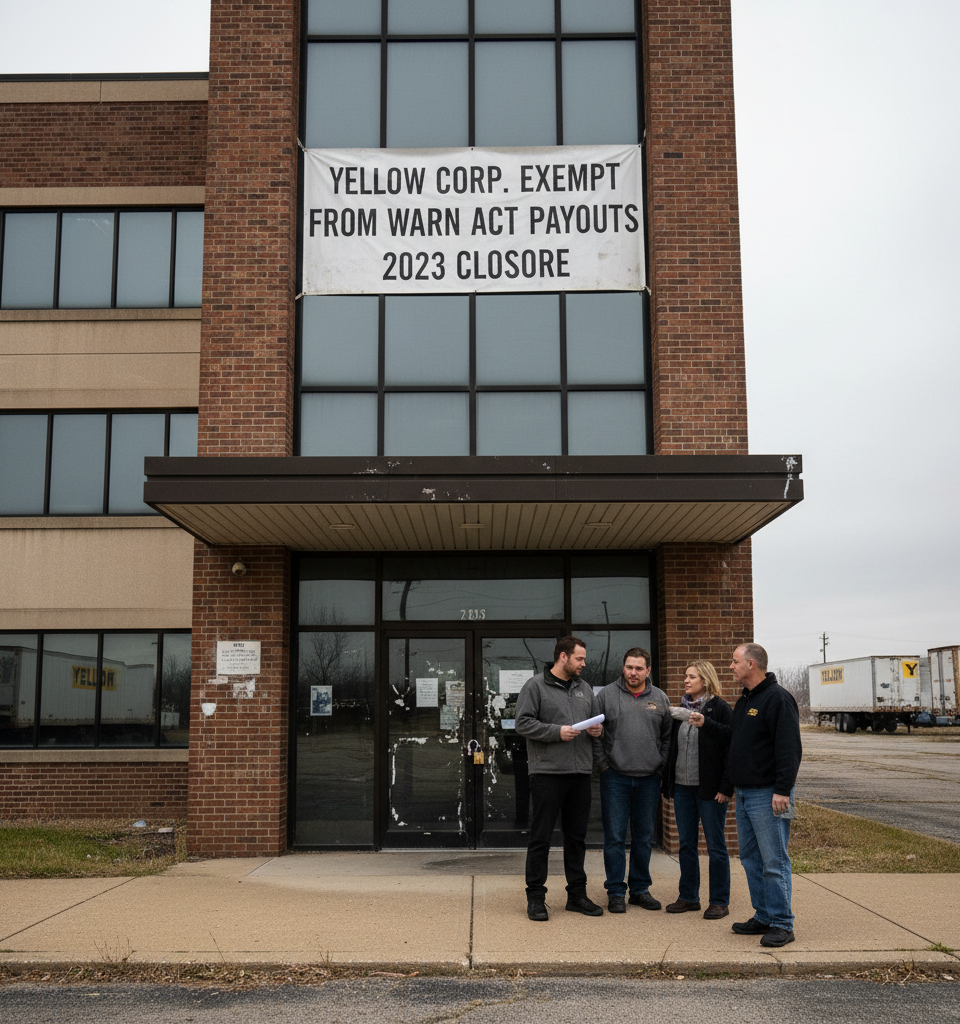
A U.S. District Court on Monday ruled that Yellow Corp. is not obligated to compensate its Teamster employees for delayed layoff notices issued during the company's abrupt shutdown in 2023. The decision concludes a period of uncertainty for the former employees regarding potential payouts under the Worker Adjustment and Retraining Notification (WARN) Act.
The ruling effectively absolves the embattled trucking firm from what could have amounted to substantial financial penalties connected to its sudden cessation of operations. The WARN Act typically requires employers with 100 or more employees to provide 60 days' advance notice of plant closings and mass layoffs. This provision is designed to give affected workers and their families time to adjust to the prospective loss of employment, seek new jobs, and, if necessary, obtain training for new occupations.
Background of Yellow Corp.'s Collapse
Yellow Corp., formerly known as YRC Worldwide, was a titan in the less-than-truckload (LTL) shipping sector for nearly a century. Its collapse in late July and early August 2023 sent shockwaves through the logistics industry. The company, which had been struggling with financial difficulties for years, ceased operations and filed for Chapter 11 bankruptcy. This sudden closure impacted approximately 30,000 employees, many of whom were members of the International Brotherhood of Teamsters. The company's demise was attributed to a confluence of factors, including mounting debt, operational inefficiencies, and a protracted dispute with its union over proposed operational changes.
The WARN Act and Legal Challenge
The core of the legal dispute revolved around whether Yellow Corp. had provided adequate notice to its employees as required by the WARN Act. The Teamsters union and some former employees argued that the company failed to issue the legally mandated 60-day notice prior to the mass layoffs, thereby entitling them to compensation, typically in the form of 60 days' worth of pay and benefits. Companies that violate the WARN Act can be liable to employees for back pay and benefits for the period of violation, up to 60 days.
Court's Rationale and Implications
While the specific reasoning behind the U.S. District Court's decision was not detailed in the initial report, such rulings often hinge on exemptions within the WARN Act. These exemptions can include unforeseen business circumstances, faltering company provisions, or natural disasters, where providing 60 days' notice would have hindered the company's ability to obtain capital or business necessary to stay afloat. It is plausible the court found that Yellow Corp.'s financial distress and sudden collapse met one of these exemption criteria, thereby vitiating the requirement for full WARN Act compliance. The decision spares Yellow Corp.'s remaining assets from significant claims, potentially benefiting creditors and other stakeholders in the ongoing bankruptcy proceedings.
Broader Industry Impact
The ruling could set a precedent for other financially distressed companies facing similar abrupt shutdowns, particularly concerning their obligations under the WARN Act. For the broader trucking and logistics industry, Yellow Corp.'s highly publicized downfall has already led to consolidation among competitors vying for market share and has put a spotlight on the financial health and labor relations within the sector. The absence of WARN Act payouts will likely be a disappointment for many former Yellow Corp. employees who had hoped for some form of compensation following their sudden job loss.
What This Means for Former Employees and Creditors
For the thousands of former Yellow Corp. employees, this ruling means that the avenue for seeking compensation through WARN Act claims has been effectively closed. Their focus will now likely shift entirely to other aspects of the bankruptcy proceedings, such as potential severance packages or pension-related matters, if any are still available. For Yellow Corp.'s creditors, the decision means a reduction in potential liabilities, which could marginally improve the recovery rate for their claims against the bankrupt company's estate. The ultimate distribution of Yellow Corp.'s assets continues to be a complex and lengthy process within the bankruptcy court.