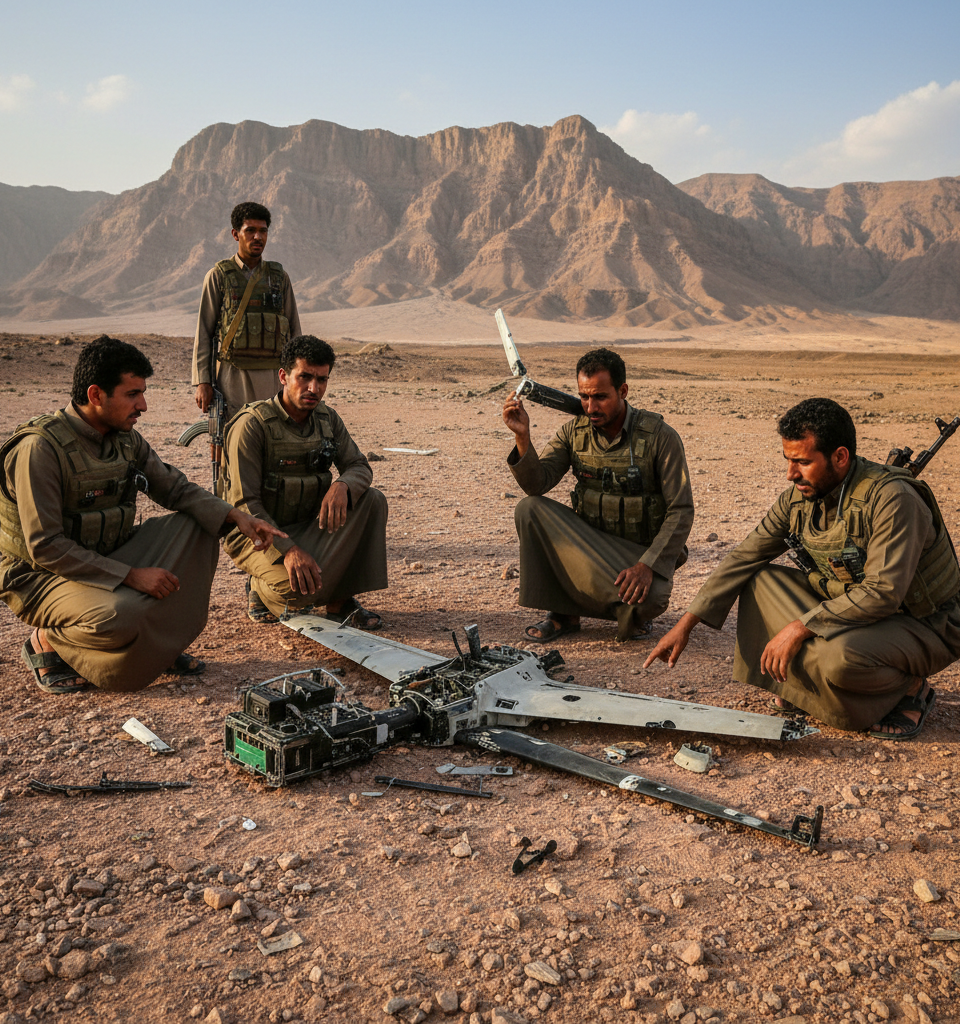
SANAA, YEMEN – The Ansar Allah movement, commonly known as the Houthis, has belatedly and with apparent reluctance entered the escalating regional conflict, lending nominal support to Iran amidst wider geopolitical tensions. This delayed intervention, a stark contrast to expectations of immediate solidarity, is largely attributed by security analysts to a substantial degradation of their military and operational capabilities following a concerted US-Israeli campaign last year. Their measured actions suggest a calculated risk assessment, prioritizing self-preservation over an unreserved commitment to their Iranian patron's regional agenda.
Historical Context and Strategic Implications
The Houthis' hesitant involvement carries significant implications for a region already teetering on the brink of wider conflict. Historically, the Houthi movement, a Zaidi Shia revivalist political and armed organization, has been a key proxy for Iran, instrumental in expanding Tehran's influence across the Arabian Peninsula. Their protracted war against the Saudi-led coalition, which commenced in 2014, showcased their resilience and capacity for asymmetric warfare. However, the 2023 US-Israeli campaign, ostensibly aimed at disrupting Iranian arms flows and Houthi offensive capabilities, appears to have inflicted a far greater toll than previously acknowledged, forcing a reassessment of their strategic calculus and their capacity to project power.
The Cost of Previous Campaigns
Specific intelligence reports, though often classified, suggest that the US-Israeli operations targeted critical Houthi infrastructure, including drone manufacturing facilities, missile launch sites, and command-and-control centers. Unofficial estimates indicate a potential reduction of up to 40% in their long-range missile arsenal and a significant portion of their drone swarms. Furthermore, financial sanctions and disruptions to illicit supply chains are believed to have severely constrained their ability to acquire new hardware. This degradation explains their current limited and often symbolic actions, such as sporadic, largely ineffective long-range drone attacks that appear more performative than tactically decisive.
Regional Impact and Geopolitical Ripples
From a regional perspective, the Houthis' diminished capacity creates a double-edged sword. On one hand, it lessens the immediate threat they pose to maritime navigation in the Bab-el-Mandeb strait and to Saudi Arabian economic targets, potentially easing some pressure points in the Red Sea. On the other hand, it complicates Iran's regional strategy, as a weakened Houthi front reduces Tehran's leverage and proxy network effectiveness. This dynamic could compel Iran to either double down on support to rehabilitate Houthi capabilities or seek alternative avenues for influence, potentially through other proxy groups or more direct, overt actions in the region.
Expert Analysis: A Waning Proxy Power
Security analysts are largely in agreement regarding the assessment of Houthi capabilities. Dr. Fatima Al-Shamali, a prominent Middle East security expert at the Gulf Institute for Strategic Studies, notes, "The US-Israeli campaign was far more effective than public statements often suggested. It has fundamentally altered the Houthis' capacity to act as a formidable regional player for Iran, reducing them to more of a nuisance than a strategic threat in the short term." She adds, "Their current actions are a clear indication of a weakened entity, compelled to show solidarity but unable to commit to a full-scale offensive due to depleted resources and manpower."
What Lies Ahead: Rebuilding and Recalibration
The immediate future for the Houthis likely involves a period of internal consolidation, replenishment, and recalibration. Iran will undoubtedly attempt to re-arm and re-finance their Yemeni allies, but direct major weapon shipments remain a considerable challenge due to ongoing naval interdictions. This period of weakness could also foster internal dissent within the Houthi movement or inspire regional adversaries to press their advantage. The lingering humanitarian crisis in Yemen, exacerbated by years of conflict and economic blockade, will also continue to be a significant factor in their operational considerations, as large-scale military actions could ignite further international condemnation and intervention. The true extent of their recovery will be a critical determinant of future regional stability.