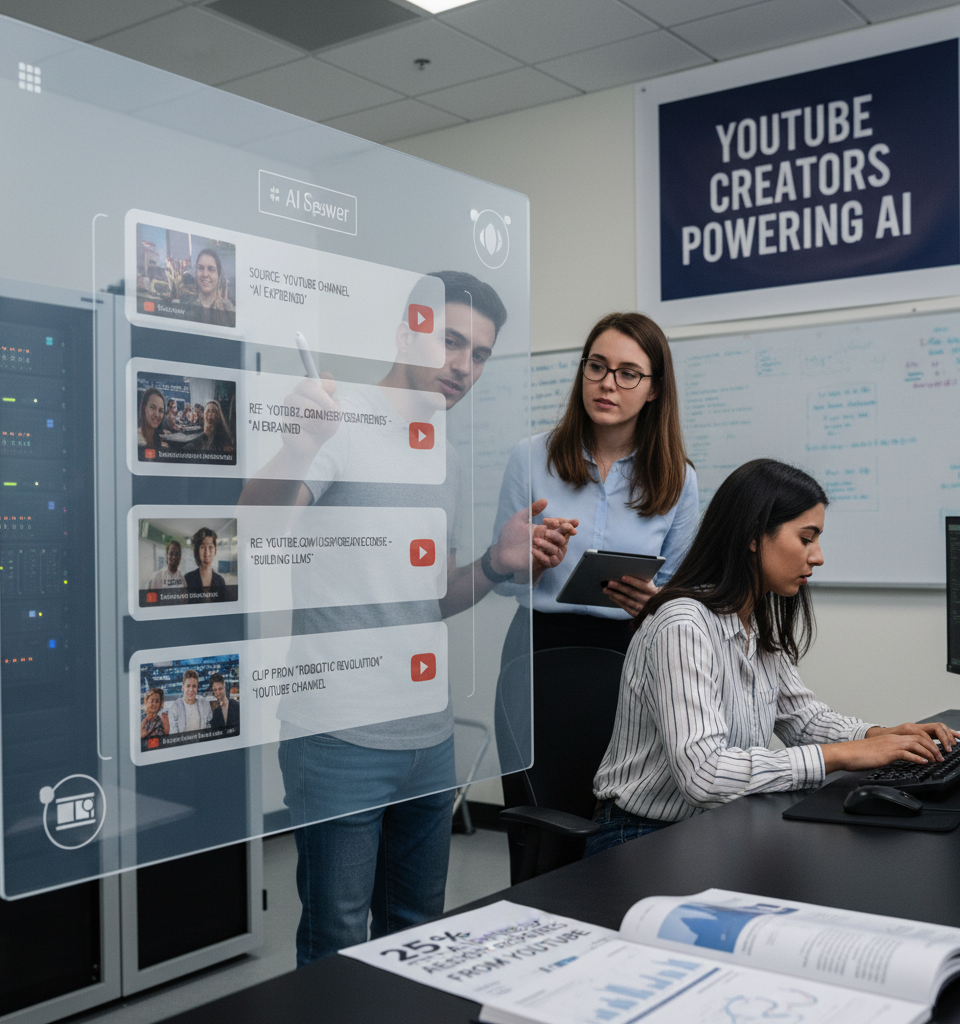
Content generated by YouTube creators is rapidly becoming an indispensable, albeit often uncredited, resource for artificial intelligence chatbots, according to findings from digital marketing agency Jellyfish. The research, shared exclusively with Adweek, reveals that more than 25% of all chatbot prompts are now being answered with responses that cite content originating from YouTube creators. This pervasive integration underscores a significant, and potentially contentious, shift in how AI systems leverage user-generated content.
This development holds substantial implications for both the burgeoning AI industry and the creator economy. The sheer volume of content being referenced is remarkable; Jellyfish reported that over one million unique YouTube videos are cited by AI chatbots in the U.S. each day, and this figure applies solely to responses within the Consumer Packaged Goods (CPG) category. While the CPG sector provides a specific lens for this initial data, it suggests an even broader reliance across diverse categories, hinting at the vast scale of content integration.
The research specifically highlighted certain “high-intent” search scenarios where YouTube creator content is particularly prevalent. These situations typically involve users seeking detailed explanations, product reviews, or how-to guides, areas where YouTube creators have historically excelled in delivering comprehensive and engaging information. The chatbots' ability to tap into this rich reservoir of multimedia content allows them to provide more nuanced and helpful responses, thereby enhancing the user experience.
The growing reliance on YouTube content by AI chatbots presents a complex ethical and economic landscape. For creators, this phenomenon raises critical questions about intellectual property, fair compensation, and content attribution. If their work is directly feeding the knowledge base of powerful AI systems, there is an increasing expectation for creators to be acknowledged, and potentially remunerated, for their contributions. Currently, the mechanisms for such recognition or compensation are largely absent, setting the stage for potential future disputes.
From the perspective of AI developers and companies deploying these chatbots, the integration of creator content is a double-edged sword. While it enriches their systems and improves response quality, it also exposes them to potential legal challenges regarding copyright and licensing. The implicit use of vast amounts of third-party content without formal agreements could lead to a re-evaluation of content sourcing strategies and necessitate new frameworks for collaboration with creators.
The digital marketing sector, particularly agencies like Jellyfish, will need to adapt their strategies to this evolving dynamic. Understanding which creator content is being leveraged by AI chatbots can inform new approaches to influencer marketing, content optimization, and search engine marketing (SEM). Marketers may soon need to consider not just human audience consumption, but also AI bot consumption, when developing content strategies for brands.
Future Implications for Creators and AI
The findings point towards an urgent need for industry-wide discussions and potentially new regulatory frameworks to address the symbiotic, yet currently unbalanced, relationship between AI and content creators. As AI models become more sophisticated and their reliance on diverse data sources deepens, the role of human-generated content, especially from platforms like YouTube, will only grow. This could lead to a future where creators are actively courted by AI companies for access to their content, or alternatively, a push for stronger protections for digital intellectual property.
The Evolving Landscape of Digital Content
This trend also highlights the ongoing evolution of how information is disseminated and consumed in the digital age. Content created for human audiences is now serving as foundational data for machine intelligence, blurring the lines between traditional media consumption and AI-driven information retrieval. The sheer scale—over one million unique YouTube videos daily just for CPG queries—underscores a profound integration that will undoubtedly shape the future of both content creation and artificial intelligence development. As AI chatbots continue to permeate daily life, the invisible hand of the YouTube creator community is becoming a surprisingly potent force in shaping the information they dispense.
As the digital ecosystem continues to mature, expect increased scrutiny on data provenance, intellectual property rights, and the fair distribution of value created by content. This pioneering research from Jellyfish serves as an early warning and a crucial data point in understanding the complex interdependencies forming between AI and the human creators who fuel its intelligence.