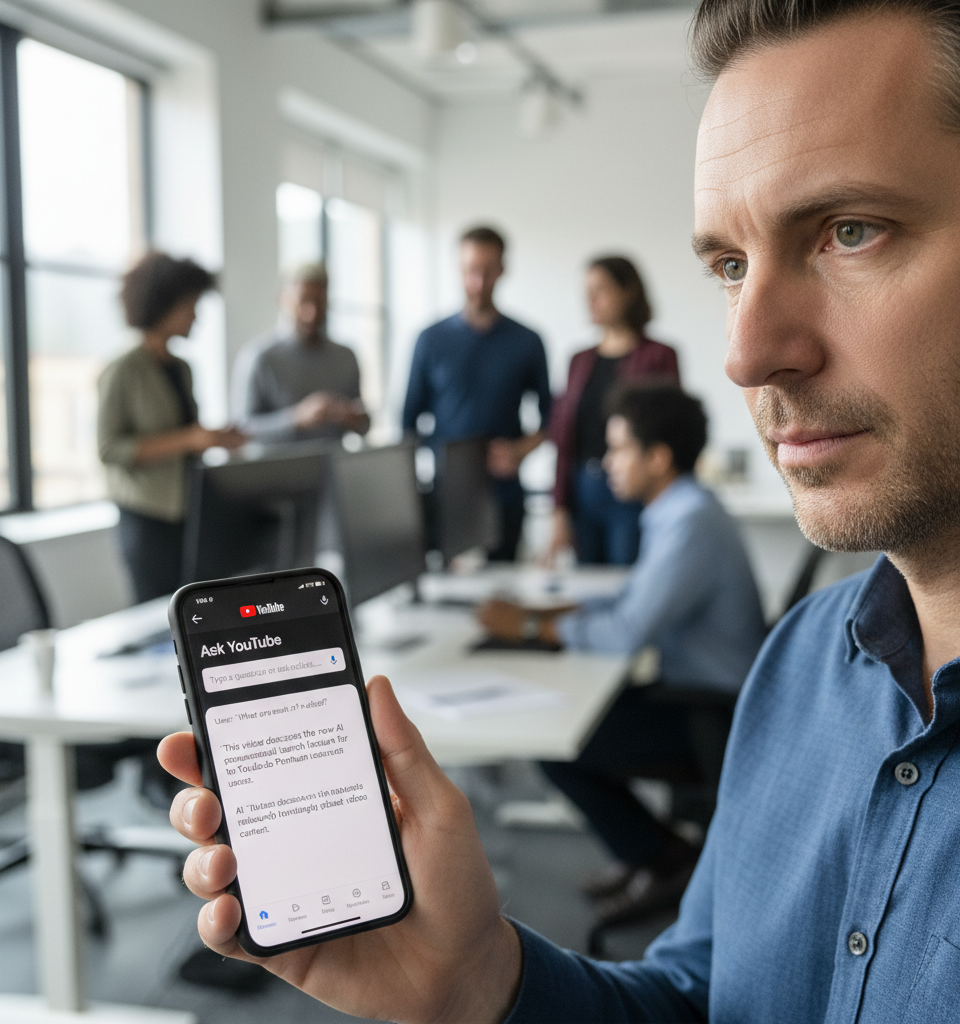
, has launched a new experimental AI-powered search feature, "Ask YouTube," designed to provide users with more interactive and comprehensive search experiences. This development, announced on Google's YouTube Labs page, allows eligible Premium subscribers in the United States to pose complex questions and receive detailed responses that integrate both video content and text, along with options for follow-up questions to delve deeper into topics. The rollout commenced immediately and is slated to run until June 8, targeting users aged 18 and older who opt into the feature through their account settings.
This move by Google underscores its unwavering commitment to integrating advanced artificial intelligence capabilities into its core product offerings. Following the highly publicized integration of generative AI into its flagship search engine, Google Search, the expansion to YouTube highlights the company's strategy to transform how users interact with online content discovery. The "Ask YouTube" feature aims to move beyond traditional keyword-based searches, enabling a more natural language processing interface that mimics human conversation, potentially revolutionizing content consumption on the platform.
The experimental phase is crucial for Google to collect user feedback and refine the AI's performance and accuracy., a demographic often targeted for early access to new features due to their engagement and willingness to explore novel functionalities. Users can activate the feature via their account settings, indicating a controlled rollout to manage initial strain on AI models and ensure a relatively stable user experience.
The precise technical architecture underpinning "Ask YouTube" has not been fully disclosed, but it is expected to leverage Google's extensive large language models (LLMs) and deep learning algorithms, similar to those powering Bard and the new AI Search Generative Experience (SGE). The introduction of conversational AI search on YouTube has significant implications for the broader online video landscape and digital content discovery. Competitors in the video streaming space, such as TikTok and Meta's Facebook Watch, are closely watching Google's AI advancements.
Should "Ask YouTube" prove successful, it could set a new industry standard for how users find and consume information within video platforms, potentially forcing rivals to accelerate their own AI integration plans. For content creators, this could shift optimization strategies from mere keyword tagging to ensuring content is structured in a way that is easily digestible and retrievable by conversational AI, potentially increasing viewership for highly relevant, well-explained videos. Industry analysts view this as a strategic defensive and offensive play by Google. "
YouTube, with its vast library of user-generated content, presents an ideal testing ground for conversational AI beyond simple factual recalls," stated Dr. Evelyn Reed, a tech industry analyst at Global Data Insights. "If successful, this could significantly enhance user engagement and potentially increase Premium subscriptions. However, the challenge lies in maintaining accuracy and preventing the proliferation of misinformation, a critical concern with generative AI."
Analysts also point to the potential for new advertising models as AI-driven discovery refines user intent with greater precision, opening avenues for highly targeted, contextually relevant advertisements. Looking ahead, the experimental results from this initial phase will dictate the future trajectory of "Ask YouTube." Should the feedback be overwhelmingly positive and the technology prove scalable and reliable, Google is likely to expand the feature to a wider audience, including non-Premium users and international markets.
The integration of AI across Google's services is not a standalone effort but part of a broader, multi-year strategy to solidify its dominance in search and digital content. Future iterations could see even deeper integration, such as AI-powered video summarization, in-video search for specific moments, or even AI-curated playlists based on nuanced user queries. The June 8 cutoff for the current experiment suggests a rapid analysis period, with potential for further announcements later in the year regarding broader availability or enhanced features.
This initiative also raises questions about content moderation and the ethical implications of AI-driven content recommendations. Google will need to ensure that the AI prioritizes credible sources and does not inadvertently promote harmful or misleading content. The company's commitment to responsible AI development will be under close scrutiny as it deploys these powerful tools to billions of users worldwide.
The success of "Ask YouTube" will not only be measured in user adoption but also in Google's ability to navigate these complex ethical and societal challenges successfully.