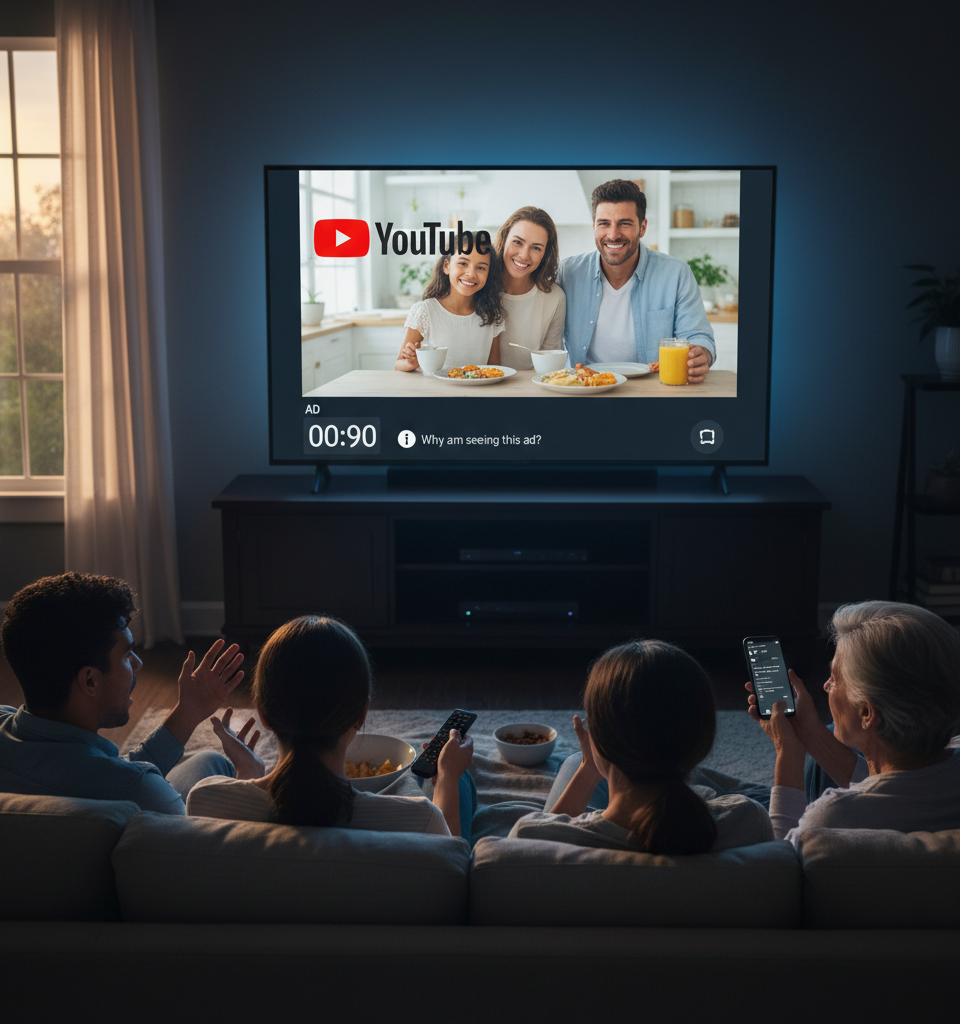
San Bruno, CA – October 26, 2023 – YouTube, the world's dominant video-sharing platform owned by Alphabet, is confronting a fresh wave of user discontent following widespread reports of unskippable 90-second advertisements appearing on its connected television (CTV) application. This aggressive move, first reported by numerous users across social media and online forums, marks a significant escalation in the platform's advertising strategy, prompting widespread frustration and igniting debates about the deteriorating balance between monetization and user experience.
The introduction of these elongated, mandatory ad breaks highlights YouTube's ongoing efforts to bolster its advertising revenue, particularly within the lucrative CTV market. Unlike shorter, often skippable ads prevalent on mobile and desktop platforms, these new 90-second formats on smart TVs and streaming devices present a stark contrast, forcing viewers through extended commercial interruptions without recourse. This development comes amidst an increasingly competitive streaming landscape, where platforms are under immense pressure to demonstrate profitability and growth to investors.
Reports of these lengthy ads initially surfaced earlier this week, with users detailing staggered ad rollouts seemingly targeting specific geolocations or user segments. While official confirmation from YouTube remains pending, the anecdotal evidence points to a deliberate testing or implementation phase. Prior to this, YouTube had experimented with various ad durations and formats, including double pre-roll ads and non-skippable 15-30 second spots. However, the 90-second duration represents a substantial leap, nearing the lengths typically associated with traditional broadcast television commercial breaks.
Industry analysts view this as a direct response to several pressures. Firstly, YouTube is under perpetual pressure to increase its Average Revenue Per User (ARPU). In Q3 2023, YouTube ads generated approximately $7.95 billion, a modest increase from previous quarters but still short of some Wall Street expectations. Secondly, the growth of ad blockers on desktop and mobile continues to erode potential revenue, pushing YouTube to explore more 'unavoidable' ad inventory, especially on platforms where ad-blocking software is less prevalent or non-existent, like smart TVs. Furthermore, the burgeoning CTV market, projected to reach over $30 billion in ad spend by 2025, represents a significant growth vector for the company.
Expert opinions diverge on the long-term viability of such an aggressive ad strategy. "This is a high-risk, high-reward play," states Dr. Evelyn Pierce, a media economics professor at Stanford University. "While longer, unskippable ads can command premium CPMs (Cost Per Mille) from advertisers, there's a critical saturation point. Pushing past that risks alienating a loyal user base, potentially driving them towards ad-free alternatives or competitor platforms like TikTok and even traditional streaming services." Another perspective, from digital advertising consultant Mark Jensen, suggests, "YouTube is leveraging its dominant market position. For many, especially in households without cable, YouTube is the primary source of video content. They're testing the elasticity of user tolerance, and 90 seconds, while jarring, might still be perceived as a tolerable trade-off for free content by a significant segment of users." Jensen also notes that this could be a strategic push to convert more users to YouTube Premium, its ad-free subscription service, which costs $13.99 per month.
Looking ahead, the implications of this strategy are multi-faceted. If widely deployed, it could significantly boost YouTube's advertising revenue, especially from brands seeking guaranteed visibility. However, it also poses a considerable threat to user satisfaction and retention. The move could accelerate the adoption of ad-free alternatives, ranging from competitor platforms to illegal ad-blocking solutions on smart devices, as users seek ways to bypass the increasingly intrusive advertisements. Moreover, this could prompt a re-evaluation from content creators, who rely on ad revenue sharing, as user attrition could indirectly impact their earnings. The platform will likely monitor user churn rates and survey data closely in the coming months to assess the true cost-benefit of this contentious advertising pivot.
The coming quarters will be crucial in determining whether YouTube's bet on longer, unskippable CTV ads pays off without irrevocably damaging its user goodwill. The delicate balance between maximizing advertiser value and preserving a compelling user experience remains YouTube's most significant challenge as it navigates an increasingly fragmented and competitive digital media landscape.
Contextualizing YouTube's Advertising Evolution
YouTube's monetization journey has been a carefully calibrated experiment in balancing content accessibility with revenue generation. Initially, the platform relied heavily on simple pre-roll and display ads. Over the years, as viewer habits shifted and ad-blocking technology became more sophisticated, YouTube continuously innovated its ad formats. The push toward unskippable ads began incrementally, with 15-second and 30-second non-skippable formats becoming standard. This gradual escalation reflects a broader industry trend where publishers, confronted by declining traditional ad revenues and the rise of subscription-based models, seek more assertive ways to monetize free content. The CTV space, with its lean-back viewing experience and communal appeal, offers a particularly fertile ground for such experiments, given the traditionally higher tolerance for ads in a living room setting.
The Financial Imperative Behind Aggressive Monetization
Alphabet, YouTube's parent company, consistently emphasizes the platform's contribution to its overall financial health. For the third quarter of 2023, YouTube ads segment reported $7.95 billion in revenue, up from $7.07 billion in Q3 2022. While this represents a healthy growth trajectory of over 12%, the company is always seeking avenues for further expansion. The average revenue per user (ARPU) for YouTube, while not always publicly disclosed, is a key metric. By extending ad durations and making them unskippable, YouTube directly impacts two critical factors: the volume of ad impressions and the premium advertisers are willing to pay for guaranteed engagement. This move is less about generating incremental dollars from existing ad slots and more about creating entirely new, higher-value inventory.
User Backlash and Potential Ramifications
The immediate backlash observed across social media platforms like X (formerly Twitter) and Reddit indicates a strong negative sentiment from a significant portion of YouTube's user base. Comments range from expressions of annoyance and frustration to threats of abandoning the platform. The primary complaint centers on the disruption to the viewing flow and the feeling of being held 'hostage' by the platform. While initial complaints are to be expected with any major change, the sheer length of these new ads, combined with their unskippable nature, presents a greater risk of long-term user churn. For advertisers, while the reach and guaranteed views are appealing, there's also a potential downside if their brands become associated with an overwhelmingly negative user experience. The delicate balance for YouTube lies in determining how much friction users are willing to tolerate before the perceived value of the free content is outweighed by the annoyance of the ads.