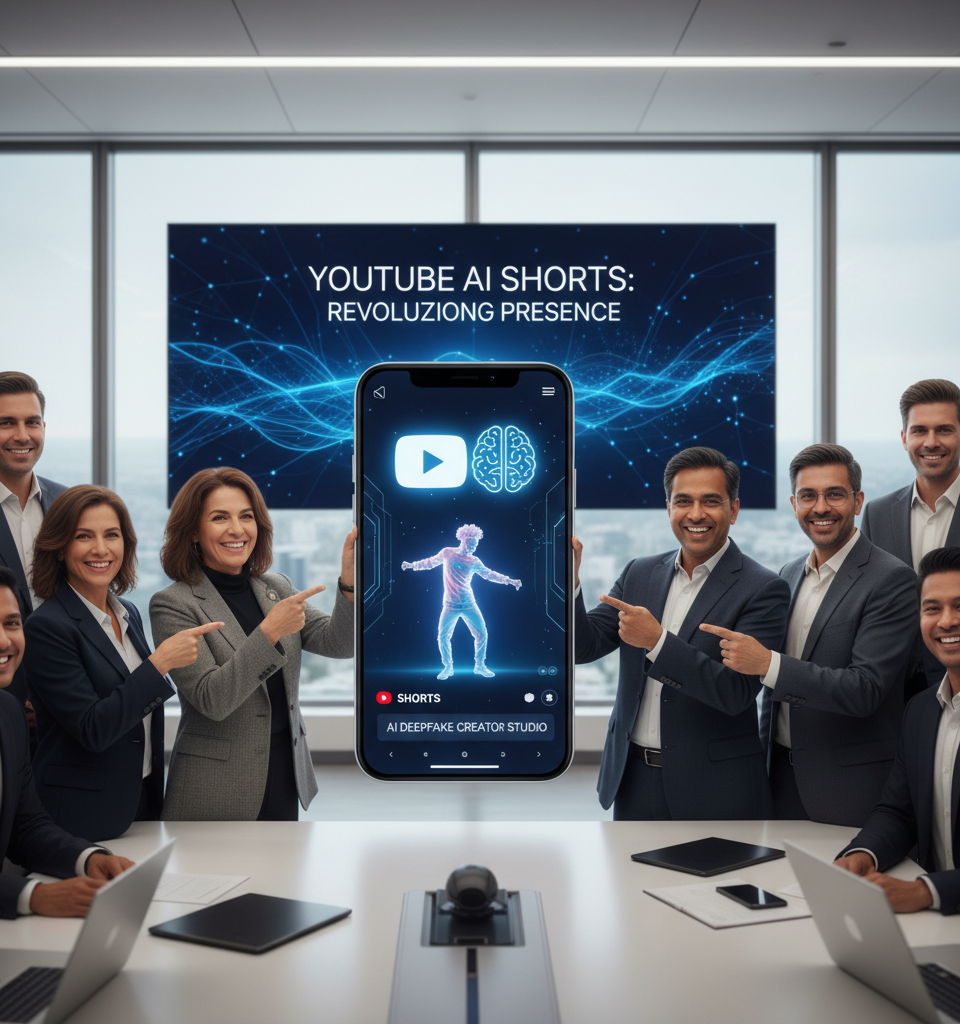
Google-owned YouTube has announced a significant advancement in creator tools, introducing an artificial intelligence-driven feature that allows creators to generate deepfake versions of themselves for use in YouTube Shorts. This development empowers content creators to produce short-form video content without the need for their direct physical presence, marking a pivotal moment in the evolution of digital content creation.
The Dawn of AI-Generated Creator Presence
The new AI capability is designed to address a growing demand among creators for tools that streamline content production and enhance scalability. By leveraging sophisticated deepfake technology, YouTube aims to free creators from the constraints of constant on-screen presence, enabling them to expand their content output, explore diverse formats, and maintain engagement across multiple platforms. This initiative underscores YouTube's strategic focus on AI innovation as a core driver for future growth, particularly within the highly competitive short-form video market.
Contextualizing YouTube's AI Push
This move by YouTube comes amidst a burgeoning interest and significant investment in generative AI across the tech industry. Google, in particular, has been aggressively integrating AI into various products and services, viewing it as a critical frontier for market dominance and revenue generation. The platform's emphasis on AI for creators reflects a broader trend of companies seeking to democratize advanced technological capabilities, putting powerful tools directly into the hands of its vast user base. It also signifies an acknowledgment of the intense pressure on creators to continuously produce fresh content, a challenge that traditional production methods often struggle to meet.
Feature Specifics and Creator Benefits
While specific technical details of the deepfake generation process are still emerging, the overarching goal is to provide creators with a user-friendly interface to create AI renditions of themselves. This could involve training the AI on existing footage of the creator, allowing the system to produce new video segments that mimic their appearance, voice, and even mannerisms. The immediate benefits for creators are substantial: increased content volume without increased personal effort, the ability to localize content with AI-generated multilingual versions, and the potential to maintain a digital presence even during personal absences. This feature could particularly benefit creators who manage multiple channels or operate on tight production schedules.
Impact on the Creator Economy and Industry Standards
The introduction of AI deepfake technology carries profound implications for the creator economy and broader media landscape. It could democratize content creation further, lowering the barrier to entry for aspiring YouTubers who may lack the resources or comfort level for on-camera appearances. Conversely, it raises significant questions about authenticity, intellectual property, and the potential for misuse. Industry experts are already debating ethical guidelines and potential safeguards needed to prevent the proliferation of misleading or unauthorized AI-generated content. This technology could also reshape advertising models, offering new avenues for brands to integrate with AI personas.
Expert Perspectives and Ethical Considerations
Technology analysts like Sarah Chen from Tech Insights Group highlight the dual nature of this innovation. “While undeniably powerful for productivity, YouTube’s deepfake tool necessitates robust ethical frameworks and transparency mechanisms,” Chen states. “The potential for both creative liberation and serious misuse is high. YouTube must prioritize creator education and clear content policies to maintain trust within its ecosystem.” Concerns range from the potential for identity theft and disinformation to the erosion of trust between creators and their audience if the AI nature of the content is not clearly disclosed. Addressing these ethical dilemmas will be crucial for the long-term success and acceptance of such tools.
The Path Forward: Regulation and Responsible Innovation
Looking ahead, YouTube's move is likely to spur further innovation in AI-powered content creation, potentially accelerating the development of virtual influencers and automated content pipelines. The company will face increasing scrutiny from regulators and advocacy groups regarding the responsible deployment of this technology. Future developments may include more sophisticated control mechanisms for creators, enhanced AI detection tools for viewers, and potentially, industry-wide standards for disclosing AI-generated content. The success of this feature will largely hinge on YouTube's ability to balance innovation with ethical responsibility, ensuring that creators can harness these powerful tools without compromising integrity or trust.