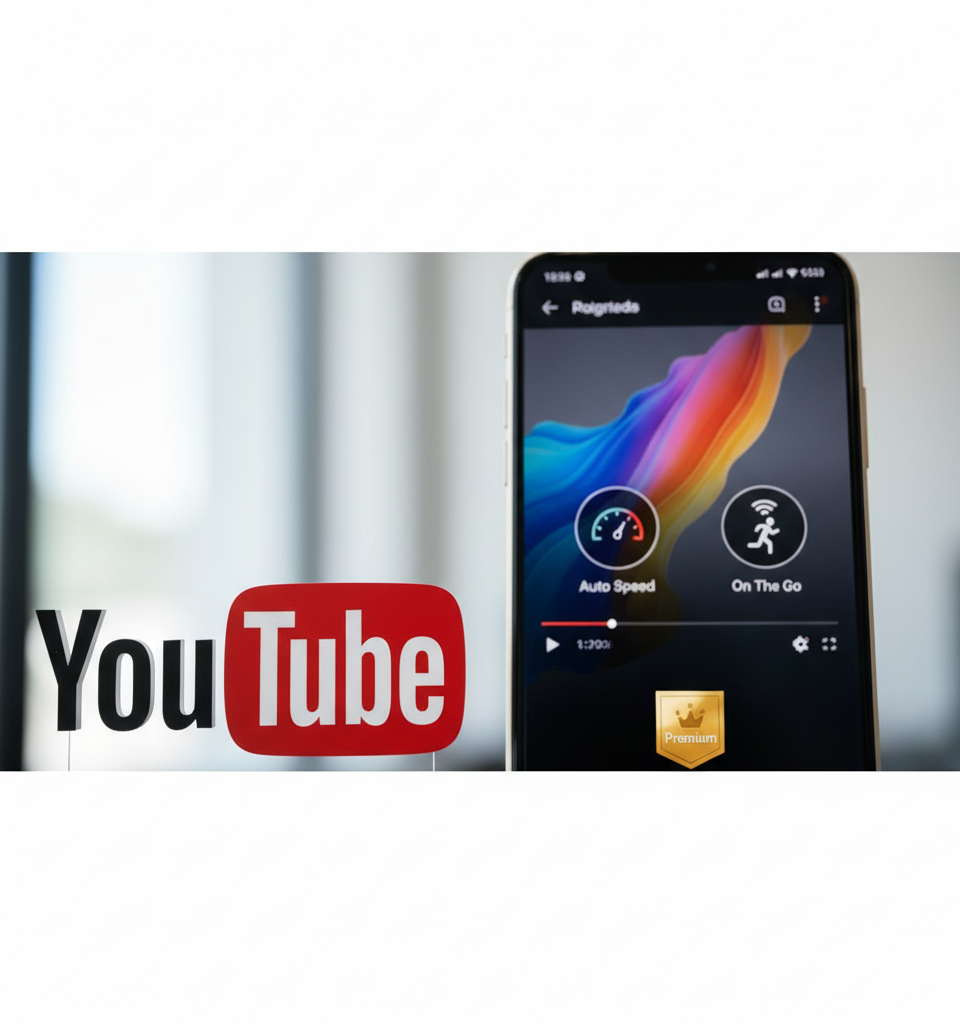
San Bruno, California – In a significant move to refine user experience, YouTube, the global video-sharing juggernaut owned by Google, is currently in the testing phase for two innovative playback features: 'Auto Speed' and 'On the Go.' While the company has yet to formally announce these developments, early reports from a select group of users and tech analysts suggest these enhancements are designed to offer a more fluid and personalized viewing experience. Crucially, indications are strong that these advanced functionalities will be exclusive to YouTube Premium subscribers, potentially elevating the value proposition of the paid tier amidst an increasingly competitive streaming landscape.
Contextualizing the Premium Push
This strategic pilot program arrives as YouTube continues its aggressive push to convert a larger segment of its vast free user base into paying subscribers. With over 2.5 billion monthly active users globally, YouTube Premium, which offers ad-free viewing, offline downloads, and background playback, claimed over 80 million subscribers as of late 2023. The introduction of 'Auto Speed' and 'On the Go' appears to be a direct response to evolving consumer demands for more intelligent content delivery and enhanced mobile interaction. This initiative aligns with a broader industry trend where streaming platforms are increasingly leveraging AI and sophisticated user interface (UI) design to differentiate their premium offerings.
Diving into the New Features: 'Auto Speed' and 'On the Go'
'Auto Speed' is perhaps the more technically ambitious of the two. This feature promises to dynamically adjust video playback speed based on the content being watched, and potentially, the user's engagement patterns. For instance, it might accelerate through less information-dense segments of a lecture or tutorial, while slowing down for critical demonstrations or complex explanations. The goal is to optimize viewing time without sacrificing comprehension. 'On the Go,' conversely, addresses a common pain point for mobile users. It aims to simplify playback controls, making it easier to manage videos with minimal interaction while multitasking or in motion. This could involve larger, more intuitive buttons, gesture-based commands, or even voice integration, significantly improving accessibility for users on the move.
Industry and Market Implications
The potential restriction of 'Auto Speed' and 'On the Go' to YouTube Premium subscribers underscores a significant strategic pivot. By bundling these highly desirable features behind a paywall, YouTube aims to increase its Premium subscription growth, a critical revenue stream for Alphabet Inc. in a period of tightening advertising markets. This move could set a new standard for premium streaming services, prompting competitors like TikTok, Netflix, and even traditional broadcasters with streaming arms to consider similar value-added propositions. Analysts project that a successful rollout could contribute an additional 5-10% in Premium subscriber growth within the next two fiscal years, translating to hundreds of millions in new annual recurring revenue.
Expert Perspectives on YouTube's Strategy
Technology analysts are largely viewing this as a shrewd but potentially polarizing strategy. "YouTube is diversifying its revenue streams beyond just advertising, which is a smart long-term play," comments Dr. Evelyn Reed, a leading media economist at the University of California, Berkeley. "However, making fundamental improvements to the viewing experience exclusive to premium users could ignite a debate about the erosion of the free tier's utility." Some experts suggest that while these features offer genuine utility, the real test will be whether YouTube can effectively communicate their value to justify the monthly subscription fee, which currently stands at around $13.99 in the U.S.
The Road Ahead: Future Implications and Rollout
While details remain nascent, the successful deployment of 'Auto Speed' and 'On the Go' could herald a new era of intelligent, adaptive content consumption. Future iterations might see these features integrated with AI-driven content summaries, personalized content recommendations based on viewing speed preferences, or even real-time interactive elements. YouTube's ongoing testing indicates a methodical approach, likely involving A/B testing with different user segments to fine-tune functionality and gauge subscriber interest. A broader public rollout, potentially incorporating feedback from the current test phase, is anticipated in late 2024 or early 2025, further solidifying YouTube Premium's position in the fiercely competitive streaming market.