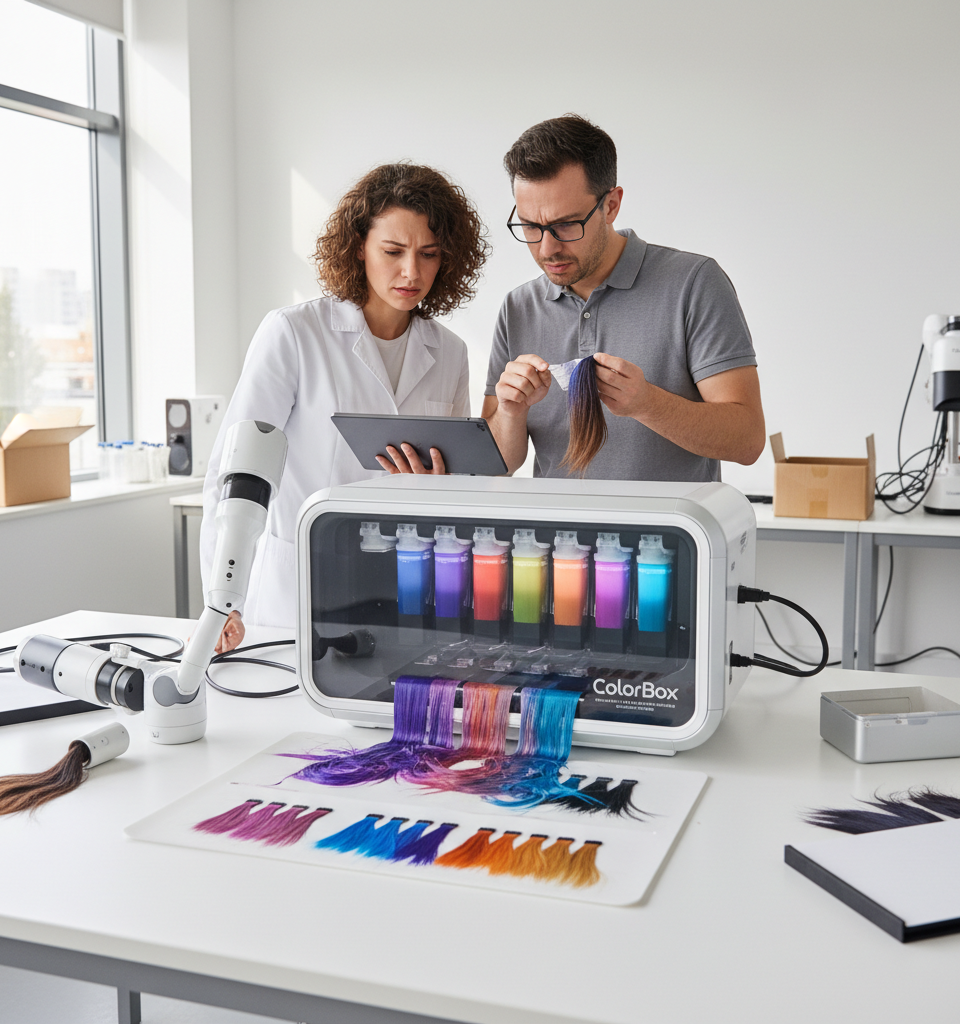
San Francisco, CA – [Date] – Zuvi, a technology firm aiming to disrupt the beauty industry, is facing significant scrutiny following reports that its groundbreaking ColorBox device, marketed as a "hair dye printer" capable of producing hundreds of customized shades, has demonstrably failed to meet its core promises during early evaluations. The ambitious personal coloring device, which garnered considerable buzz pre-launch for its potential to democratize hair dye customization at home, appears to struggle with fundamental color accuracy and consistency, according to initial assessments. This development casts a shadow over Zuvi's innovative approach and prompts questions about the efficacy of printing technology in the intricate realm of cosmetic coloration.
The Promise of Personalized Pigment
Zuvi's ColorBox was introduced with the bold vision of transforming the home hair coloring experience, allowing users to precisely mix and apply myriad shades with unprecedented ease and accuracy. The underlying technology aimed to leverage a cartridge-based printing system, akin to inkjet technology, to dispense and blend various dye components, thereby creating custom hues. This proposition resonated deeply within a beauty market increasingly driven by personalization and convenience. The device targeted a significant segment of consumers seeking professional-grade results without the salon visit, tapping into the estimated $20 billion global hair color market, where at-home kits represent a substantial and growing portion.
Unfulfilled Expectations: A Struggle for Basic Hues
However, early hands-on assessments indicate a stark disconnect between Zuvi's marketing claims and the ColorBox's actual performance. Reports suggest that the device, despite its sophisticated appearance and underlying technological ambition, could not reliably produce even basic, pre-defined colors, let alone the promised spectrum of hundreds. One particular review highlighted its inability to accurately blend two distinct colors, much less a complex array. This fundamental shortcoming undermines the entire premise of the ColorBox, as precise color formulation is paramount in hair dyeing. Details regarding specific color inaccuracies or failures in dye distribution remain limited, but the overall sentiment points to significant operational challenges.
Industry Implications and Market Shake-up
The struggles of the Zuvi ColorBox could have multifaceted implications for the beauty technology sector. On one hand, it may temper investor enthusiasm for overly ambitious, unproven concepts in beauty tech, particularly those relying on complex hardware and chemical integration. On the other, it reinforces the significant technical hurdles involved in bringing professional-level beauty services into the consumer's home. Major players in the hair care industry, including L'Oréal, Revlon, and Henkel, have made considerable investments in R&D for at-home solutions and personalization. If Zuvi's technology proves unviable, it could validate more traditional, albeit less groundbreaking, approaches to at-home hair coloration, or push innovation towards digital consultation and AR tools rather than complex physical mixing devices.
Expert Commentary on Innovation vs. Execution
"The concept behind the Zuvi ColorBox is undeniably visionary; it taps into a genuine consumer desire for bespoke solutions," commented Dr. Anya Sharma, a beauty tech analyst with Chroma Insights. "However, this case highlights the immense challenge of integrating advanced printing fluid dynamics with the chemical intricacies of hair dyes. The margin for error in color perception is incredibly small in cosmetics, and if the device cannot achieve basic color fidelity, its commercial viability is severely compromised. It seems like a classic case of innovation outstripping reliable execution." She further noted that the beauty industry often promises 'revolutionary' devices that struggle with the nuanced realities of human skin and hair chemistry.
The Road Ahead: Refinement or Retreat?
The immediate future for the Zuvi ColorBox remains uncertain. Zuvi faces critical decisions: either invest substantial additional resources into refining the device's core color-mixing and dispensing technology to meet its initial promises, or pivot away from the current design. Such a technical overhaul would likely involve significant redesigns of its cartridge system, nozzle technology, and software algorithms to ensure precise chemical blending and application. The company has yet to release an official statement addressing these specific performance critiques. The incident serves as a stark reminder that while innovation can capture imagination, flawless execution and consistent performance are ultimately what define market success in the competitive and demanding beauty industry.